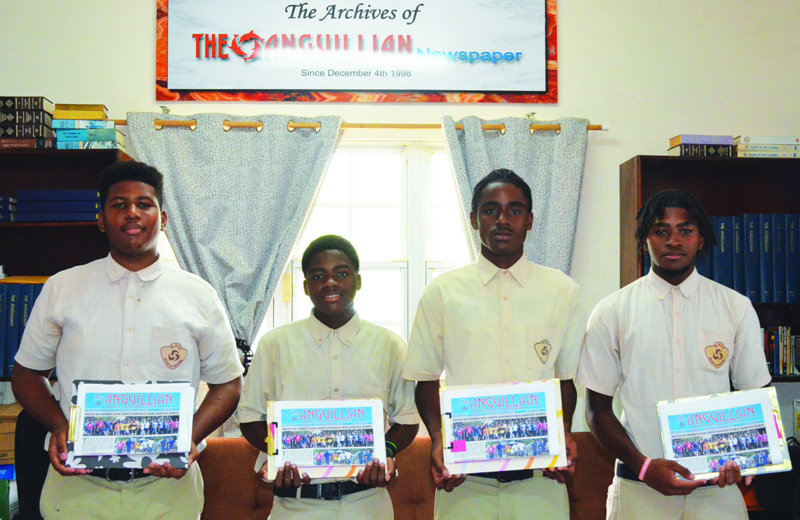
For many readers, a newspaper arrives neatly printed with bold headlines, photographs and stories that capture the pulse of the island. But for four Form Four students of the Albena Lake-Hodge Comprehensive School (ALHCS), a recent visit to The Anguillian offered something far more revealing — a behind-the-scenes look at the fast-moving, demanding and deeply important world of journalism.
The students were welcomed into the newsroom where they were introduced not only to how the newspaper operates, but to the many decisions and responsibilities that shape every edition before it reaches the public. From discussions about what determines a front-page story to conversations surrounding ethics, accuracy and public trust, the visit gave the young visitors an honest and engaging glimpse into the realities of modern journalism.
What may surprise many readers is just how curious and invested the students were throughout the experience. Representing different interests and career ambitions, each student expressed enthusiasm for a different branch of journalism, including sports reporting, travel writing and feature storytelling. Their questions reflected a growing awareness that journalism is far more than simply writing articles — it is about informing communities, asking difficult questions and ensuring that facts are presented responsibly.
The students learned about the role journalists play in safeguarding public information and the careful balance required when reporting sensitive or developing stories. Conversations also explored the growing influence of social media and the challenges journalists face in navigating an age where misinformation can spread rapidly online. Staff members shared insights into the discipline required to verify information, conduct interviews professionally and maintain fairness and integrity in reporting.
The visit was far from a lecture. The students actively participated in newsroom activities and were especially fascinated by The Anguillian’s archives. With visible excitement, they searched through past editions to discover which stories dominated headlines during their birth years and birth months. The archives quickly became more than stacks of old newspapers; they became a living timeline of Anguilla’s history, culture, triumphs and defining moments.
Laughter, curiosity and animated discussion filled the room as the students compared headlines, reflected on how much the island has evolved over the years and gained a deeper appreciation for the newspaper’s role in documenting Anguilla’s story.
The aspiring young journalists were also introduced to the practical side of the profession, including interview techniques, story development and the realities of working under deadlines. Staff members spoke candidly about the challenges of the industry — long hours, public scrutiny and the pressure to remain accurate in a fast-paced and technologically evolving environment — while also highlighting the rewards that come with telling meaningful stories and giving voice to communities.
By the end of the visit, the students departed with more than notebooks full of information. They left with a fresh perspective and a stronger understanding of journalism as both a profession and a public service.
Perhaps most exciting of all, the students were encouraged to submit stories and articles of their own for possible publication in The Anguillian. For a handful of young minds already brimming with curiosity and creativity, the opportunity opened a very real door into the media world.
Among those students exploring old headlines and learning the craft of storytelling may very well be Anguilla’s next generation of journalists now quietly finding their voice.
By Janissa Fleming