 When most people think about sport in Anguilla, baseball is rarely the first thing that comes to mind.
Cricket still carries deep roots across the island. Football dominates schoolyards and community fields. Basketball, netball and volleyball all command loyal followings of their own. Yet somewhere between those established sporting traditions, another game has quietly managed to carve out space for itself over the years — not as a passing novelty, but as a sport steadily building its own identity within Anguilla.
And perhaps the most interesting part is this: baseball in Anguilla no longer feels like an outsider sport.
For years, the game has largely been associated with the Dominican Republic community, and understandably so. In the Dominican Republic, baseball is not merely entertainment; it is culture, ambition and national pride rolled into one. Children grow up with bats in their hands the same way many Caribbean children grow up with footballs or cricket bats. Across towns and villages, makeshift baseball diamonds are as common as corner shops, and dreams of reaching Major League Baseball are shared openly among young players.
The Dominican Republic’s influence on the sport globally is undeniable. Despite its relatively small size, the country has produced hundreds of Major League Baseball players and some of the sport’s biggest international stars. Baseball there is woven into daily life, and for many families, the sport represents opportunity as much as recreation.
That passion naturally travelled with Dominican communities abroad, including those living in Anguilla. In many ways, they helped lay the groundwork for baseball’s continued presence on the island long before wider interest began to grow.
But what feels different now is that baseball in Anguilla is beginning to move beyond being seen as “the Dominican sport”.
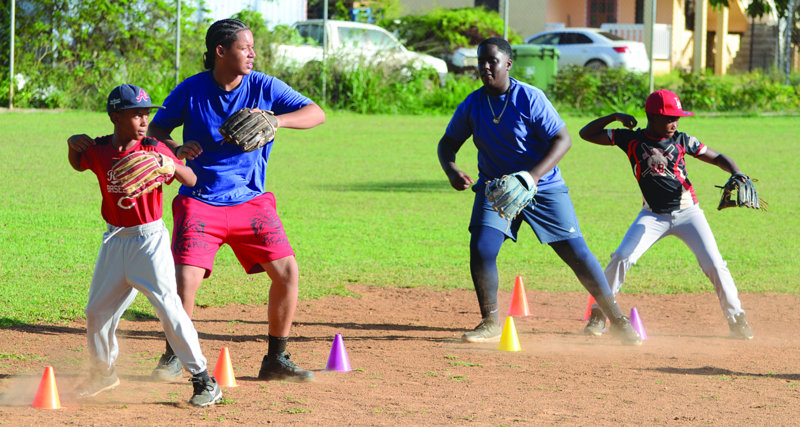
More young Anguillians are being introduced to the game through organised programmes, camps and training sessions. In particular, the Anguilla Little League, headed by Lyndon Webster, has played a major role in that development, creating opportunities for children to learn the sport in a more structured environment while encouraging discipline, teamwork and confidence.
At the same time, the Department of Sports has also become increasingly involved through baseball camps and youth activities designed to expose more children to the game. That level of institutional support matters. It signals that baseball is no longer existing solely through community passion and volunteerism, but is slowly becoming part of the island’s wider sporting conversation.
International support has further strengthened those efforts. As previously reported, individuals and organisations from the United States have donated gloves, bats, balls, uniforms and other equipment to young players in Anguilla. Coaches and trainers have also travelled to the island to help conduct training sessions and skill development programmes.
In many respects, Anguilla’s baseball story mirrors the wider Caribbean experience. While the sport may be viewed internationally as distinctly American, some of the world’s greatest baseball cultures are found throughout the Caribbean basin. Cuba, Puerto Rico, Venezuela and, of course, the Dominican Republic have all produced generations of elite players who transformed the sport internationally.
So perhaps the bigger question is not whether baseball belongs in Anguilla. But rather, why the idea may still feel surprising to some people.
Anguilla has already proven that international sporting success is possible despite the island’s small population. Zharnel Hughes became one of Britain’s premier sprinters on the Olympic and world stage, while Shara Proctor competed at both the London 2012 and Rio 2016 Olympic Games, and Omari Banks played Test cricket among others.
Decades ago, the idea of athletes from a small island like Anguilla competing among the world’s elite may have seemed unlikely to many people as well. Today, it is reality.
That same possibility now quietly exists within baseball.
No one can say whether Anguilla will eventually produce a professional baseball player or even a Major League prospect. But the infrastructure, exposure and interest now developing around the sport suggest that such a dream no longer feels impossible.
And if an Anguillian player one day walks onto a professional baseball field in the United States wearing the flag of Anguilla somewhere close to his heart — it will not be a sudden miracle story. It will be the result of years of quiet groundwork laid by communities, volunteers, coaches, overseas supporters and young players willing to embrace a sport that once existed largely on the margins of the island’s sporting culture.
Baseball may never overtake cricket or football in Anguilla. But it is possibly doing something meaningful – steadily creating a place of its own.
By Janissa Fleming