 There are some places in Anguilla that we know so well that we barely see them anymore.
Road Pond is one of them. We drive past it, around it, glance across it on our way somewhere else. We know it is there. We know that people used to pick salt there. We have heard a grandparent, teacher or somebody at a gathering mention “salt picking” in passing. But knowing that something happened somewhere and actually standing where it happened are two very different things.
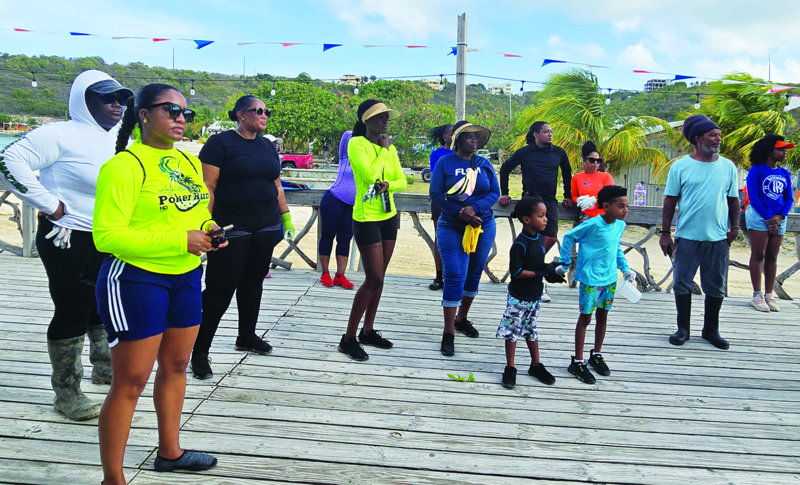
I realised that on Saturday, 29th August 2026, when I joined Quest Experiences for its End of Season Salt Picking excursion.
It was my first time actually going into the pond.
That admission feels slightly ridiculous considering how many times I have driven past it.
The experience began in Sandy Ground, where we were reminded that some of the most significant pieces of Anguilla’s salt industry are still sitting quietly around us. The old Pumphouse, which once played a central role in the later mechanised industry, is gone, destroyed by Hurricane Irma in 2017. But other remnants remain, often without much ceremony or explanation.
That may be the strangest part of our history: so much of it is still physically here, but we have become accustomed to looking straight past it.
 We walked towards the area where Lit Lounge once stood, and suddenly the past felt a little less abstract. The excursion highlighted the historical materials incorporated into the former establishment, including wood from the flat-bottomed boats, or “flats”, once used by salt workers to move salt around the pond. A mural also depicts the salt industry and the women who formed much of its workforce.
I had seen and, of course, walked by that mural countless times before.
But seeing it as part of a conversation about the actual women who once entered the pond changed it.
It is easy to romanticise old pictures of salt pickers. There is something almost picturesque about the images: people in the pond, salt stretching out around them, another chapter of “old Anguilla”. But standing there and eventually wading into that same water made the reality considerably less picturesque.
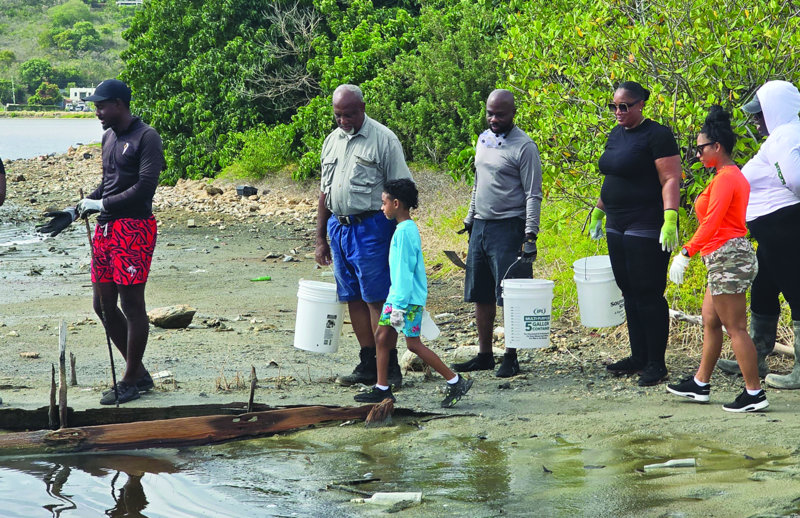
The instructions were simple enough: pick as much salt as you can carry.
The important part, however, was remembering that whatever you picked had to be carried back out.
That is when the history stopped feeling like history.
Breaking and lifting pieces of salt from the pond, bending down repeatedly and trying to carry even a modest amount across the pond gave me a tiny glimpse of the physical demands of the work. The traditional process involved breaking the hardened salt crust and lifting it into the flats before it was taken ashore, dried, processed and eventually shipped. Historical accounts describe enormous piles of salt accumulating around the pond, sometimes reaching the height of a two-storey building.
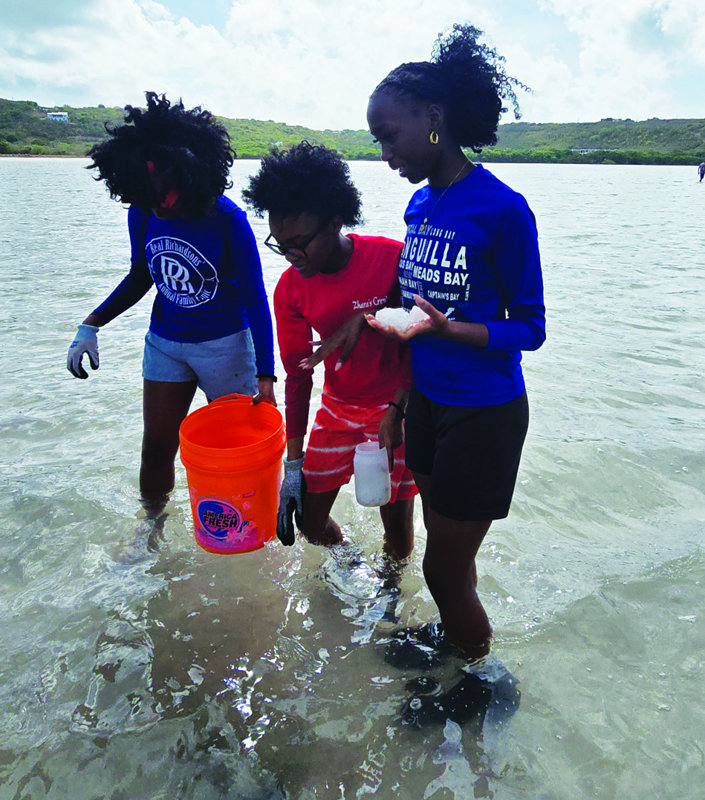 Visitors and locals, young and old, also participated in the excursion. One gentleman – particularly passionate about keeping the history alive – arrived with two buckets ready to fill and sharing bits of knowledge with those around him. Watching him and others use large sticks to loosen the salt felt almost reminiscent of how that gruelling work might have looked back then.
And much of that work was done by women.
While many Anguillian men travelled abroad in search of work, women remained and worked in the salt fields. The work was physically punishing, yet it became an important part of the island’s economic survival.
That detail stayed with me as I walked through the pond.
For a few minutes, I was quite literally following in the footsteps of women whose names I will probably never know. Women who did not have the luxury of treating salt picking as a one-off Saturday excursion. They were not there for the novelty of it. Their labour was part of how households survived and how Anguilla participated in an economy that stretched far beyond our shores.
And what an economy it was.
Salt was being harvested in Anguilla as far back as the 17th century, with the trade eventually becoming one of the island’s most important economic activities. By the 19th century, salt had been described as Anguilla’s “staple commodity”, while the early 20th century saw production on a considerable scale.
The industry later evolved with the times. The Anguilla Road Salt Company, formed by Rupert Carty and Joseph Owen, revived commercial production in the 1960s, this time with Trinidad’s oil industry as a major customer. In 1967, the industry reached its modern peak, with more than 60,000 barrels reportedly harvested in a matter of weeks and roughly 200 people involved in the operation directly or indirectly.
By the mid-1980s, however, the market had collapsed and commercial salt production came to an end, generally recognised in 1986.
Today, the pond is no longer a factory. It is a wetland, a habitat and an increasingly important piece of Anguilla’s heritage. Brine shrimp live in its salty waters, providing food for birds including flamingos. The same environment that once sustained an industry now sustains an ecosystem.
That is what made the Quest experience more than simply a pleasant morning activity.
It made me wonder how much history we encounter every day without recognising or fully appreciating it.
The old boats are in pieces of furniture. The stories are painted onto walls. The Pumphouse existed until many of us knew it as something other than a piece of industrial history. The pond itself remains exactly where it has always been, quietly producing salt as nature does, whether or not we pay attention.
We often talk about preserving Anguillian culture as though it exists somewhere behind glass, waiting for us to admire it. But sometimes preservation means getting your feet wet, bending your back over a piece of salt and realising, very quickly, that the people who did this for a living had a toughness that a Saturday visitor can only begin to appreciate.
I left the pond with wet shoes, salty legs and considerably more respect for a part of Anguilla’s history that I had previously known mostly as a passing reference.
The next time I drive past Road Pond, I doubt I will see it quite the same way.
It is no longer just the pond we drive past.
It is a workplace, a memory, an ecosystem and a piece of Anguilla that has been sitting right under our noses all along.
By Janissa Fleming