Public sector reform may not be the sort of phrase that gets much attention outside government offices, but its impact can eventually be felt by anyone who has had to navigate a public service — whether applying for a document, paying a bill, accessing a government programme or simply trying to get an answer.
That is why recent leadership development work involving Anguilla’s senior public servants is worth noting.
The Caribbean Centre for Development Administration (CARICAD) recently completed its second capacity-building intervention for the Government of Anguilla’s Permanent Secretaries, while also beginning the second cohort of its Leadership Development Programme. The initiatives form part of ongoing support for Anguilla’s public sector reform strategy.
The two-day capacity-building intervention, held on 24-25 August 2026, focused on the responsibilities and challenges facing Permanent Secretaries, including providing quality policy advice, understanding the role of the Accounting Officer and strengthening the work of Committees of Permanent Secretaries.
According to Dr. Lois Parkes, programme facilitator and CARICAD’s Leadership Development and Institutional Strengthening Specialist, the sessions provided senior officials with strategies for strengthening inter-ministerial collaboration when implementing public sector programmes. They also explored ways of improving the quality of the public policy process and developed a deeper understanding of the Permanent Secretary’s responsibilities as Accounting Officer.
The emphasis on collaboration is particularly relevant in a public service where different departments often have to work together to deliver a single outcome. For residents, those internal connections can make the difference between a process that feels straightforward and one that becomes unnecessarily complicated.
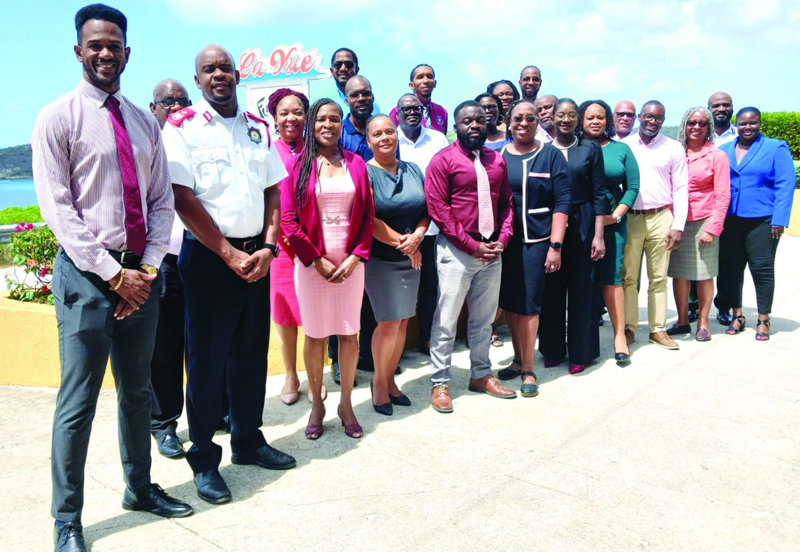
That focus continued from 26-29 August 2026, with the start of Cohort 2 of CARICAD’s Leadership Development Programme. Twenty-three senior leaders from across the Government of Anguilla took part, representing departments and agencies including Inland Revenue, the Attorney General’s Chambers, Customs, Fire, Prisons, Public Administration, the Post Office, Education, Health, Treasury, Youth and Culture, Labour, and the Ministry of Infrastructure, Communications, Utilities, Housing, Information, Technology and Environment.
The programme was delivered in a hybrid format, with three intensive days of face-to-face training. Among the areas covered was emotional intelligence, with participants developing greater awareness of how their behaviour and leadership style can affect their teams and productivity.
They also examined techniques for managing performance feedback, strengthening team dynamics and supporting staff development through coaching.
While leadership training can sometimes sound removed from the practical business of government, these areas speak directly to how effectively public institutions function. Good systems still depend on people being able to communicate, manage performance and work together.
A major part of the programme’s remaining work will therefore move from training into practical problem-solving through Action Learning. Participants will develop recommendations aimed at addressing four areas of public sector reform: improving customer service standards across the public service, strengthening the performance management system, developing a competency framework to guide learning and development, and creating a change management strategy to support the reform agenda.
Permanent Secretaries, together with the Deputy Governor, are serving as change champions for these initiatives.
That role will be important because training is only one part of reform. The more difficult task is taking ideas from a workshop and applying them to the everyday operation of Government.
Dr. Parkes commended the commitment shown by the public service’s senior leadership to their own development and to the reform agenda.
She added that CARICAD continues to support Anguilla on its public sector reform journey, including through leadership capacity interventions tailored to the Caribbean context.
The significance of the latest programmes, then, will not be measured by what happens in a training room alone. It will be measured by what happens afterwards — in government offices, across departments and, eventually, in the experiences of the people who rely on them.
By Janissa Fleming