 There is something wonderfully reassuring about watching a child become completely absorbed in figuring out why something works — and even more so when the “something” is a robot that they have built themselves.
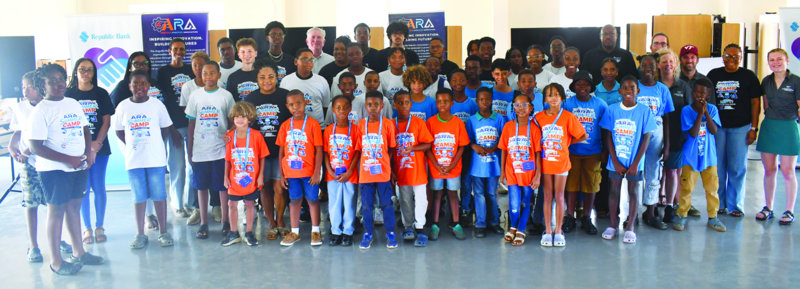
That spirit was on full display on 31st July 2026 as the Anguilla Robotics Association (ARA) wrapped up its 2026 Robotics Camp, a two-week programme that placed Anguillian children and teenagers firmly in the driver’s seat of their own learning. Held at the ALHCS Quarter Campus, the camp brought together robotics, coding, artificial intelligence, engineering, drones, 3D printing and plenty of good old-fashioned trial and error.
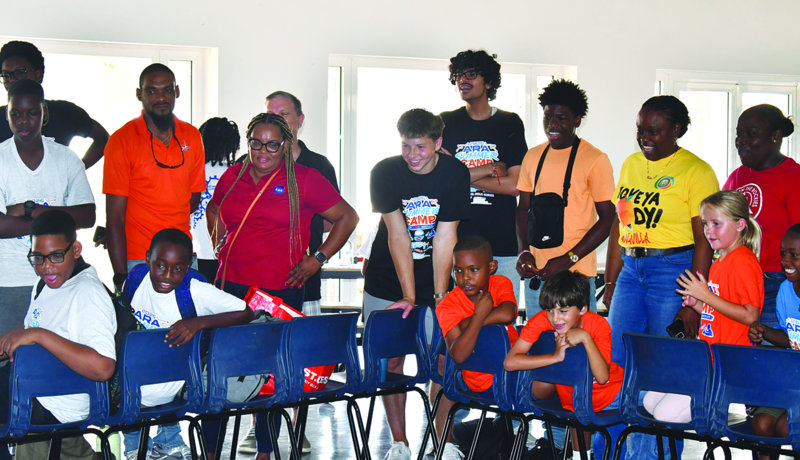 Robotics can sound like something belonging to sprawling technology hubs and university laboratories somewhere far away. But over the two weeks, the ARA offered a rather different picture: the next person designing a machine, writing software or solving an engineering problem could very well be a child sitting in a classroom here.
Founded by Zuleka Fraser, the ARA is a non-profit organisation focused on building STEM, coding, robotics and artificial intelligence literacy among young people aged five to eighteen. This year’s camp suggested that the appetite for that kind of learning is already here.
The youngest campers, aged five to seven, were perhaps the clearest reminder that curiosity does not wait for a secondary-school timetable.
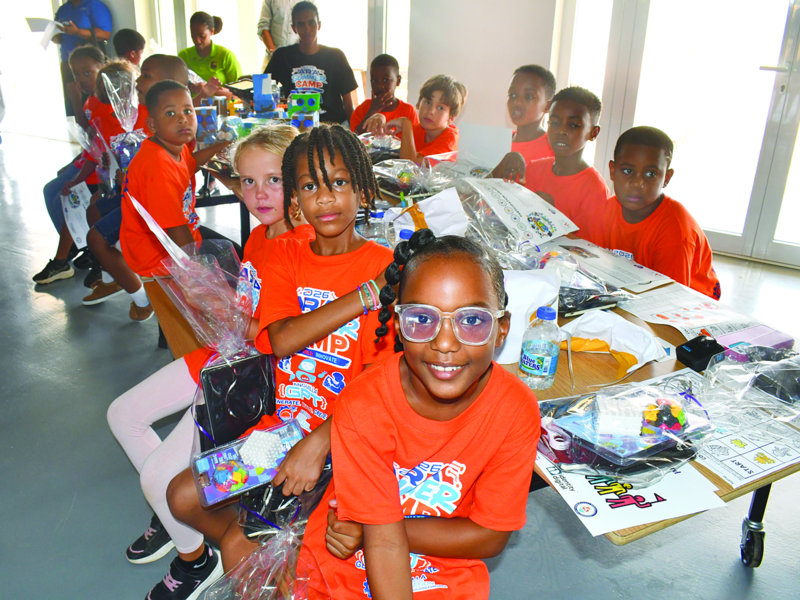 Their lessons did not necessarily begin with complicated code. Instead, they were introduced to the habits that engineers rely on: making predictions, testing ideas, learning from failure and trying again. They folded aluminium foil into boats and tested how much cargo each could carry before sinking. They watched coloured water travel between cups and mix into new colours. They sketched ideas in engineering notebooks before turning drawings into creations using LEGO, gears and coloured craft sticks.
It was the kind of detail that made the camp feel less like another summer activity and more like an early investment in confidence. As the ARA put it, the children were learning that they belong in STEM.
For the older campers, things became considerably more competitive.
The 12-to-17 age group took on a FIFA-inspired robotics challenge using REV Robotics kits, building and programming machines to compete in a miniature football arena. The mission was to score more balls than the opposing robot before time ran out.
Students had to redesign their robots, refine their programming, test strategies and troubleshoot when things inevitably failed. The arena became a lively meeting point between engineering and sport, with cheering students watching machines they had designed battle.
Through a Virginia Tech-led workshop, campers also worked with programmable CoDrones, learning how drones operate before writing code to make them move, turn and fly. Finch and Edison robots introduced students to programming at different levels, with activities requiring them to navigate challenges, respond to commands, avoid obstacles and improve their solutions through debugging and experimentation.
Instructor Jehvon Martin summed up one of the most valuable lessons behind all that activity. He told visitors that he had taught himself many of the skills he now passes on to children, explaining that even he had to “step down and learn how to code” when he encountered new technology.
For him, teaching is not about pretending to know everything. It is about continuing to learn alongside the students.
That philosophy seems to sit comfortably alongside Fraser’s vision for the ARA. Reflecting on the camp, she described the activities as “transformational” and said she had been “completely blown away” by the passion and intellect the students brought to robotics and by the ways they were already thinking about incorporating it into their futures.
The camp’s impact also extended beyond the classroom.
A partnership involving Virginia Tech, Identity Digital and the ARA gave eight Anguillian STEM students the opportunity earlier in the year to experience Virginia Tech University in the United States. For students who may eventually leave Anguilla to pursue higher education, seeing a university and its engineering possibilities first-hand can make an abstract future feel considerably more real.
Pete Fox of Identity Digital described that opportunity as one of the most rewarding parts of his work over the past year. He said the aim was to “widen the aperture” of students’ vision — to help them see that becoming an engineer, and pursuing other ambitious careers, is genuinely within their reach.
Virginia Tech’s Jake Gross likewise spoke of the students’ curiosity and passion, noting that their enthusiasm reminded the visiting educators why they do their own work.
There is a wider question here for Anguilla. What happens when young people are given access not merely to information, but to tools, mentors and experiences that allow them to imagine themselves as creators?
The Government of Anguilla appears to be betting that the answer is worth finding out. During the closing ceremony, Hon. Minister Shellya Rogers-Webster confirmed that the Government had invested more than EC$100,000 in the broader project and that a memorandum of understanding provides for a yearly grant to support the ARA’s work.
Republic Bank, Identity Digital and Virginia Tech were also recognised for their support.
That is the most important takeaway from this year’s camp. The robots, drones and coding challenges may have been the things that caught the eye, but the real project was human.
It was about a five-year-old discovering that an idea in a notebook can become something tangible. It was about a teenager discovering that a failed design is not necessarily a failed attempt. It was about young Anguillians seeing university laboratories, engineering careers and technological possibilities as things they can approach rather than things that belong to someone else.
By Janissa Fleming