The future of Anguilla’s tourism industry was placed firmly in youthful hands on Wednesday, 15th April 2026, as the Annual Anguilla National Youth Tourism Congress once again brought together promising young students and their cohorts.
With the presence of the Hon. Minister Cardigan Connor, Parliamentary Secretary Cordell Richardson, Ministerial Assistant Jeison Bryan, Permanent Secretary for Health and Tourism Karim Hodge, alongside key stakeholders including the Anguilla Tourist Board and the Department of Education, the event carried both national significance and a clear sense of expectation.
Opening the proceedings, Tourism Planner Mrs. Joleyne Robin-Williams described the Congress as “a dynamic platform that brings together young leaders to engage in thought-provoking discussions and various presentations about tourism development in Anguilla,” setting the tone for a day driven by ideas and dialogue.
That sentiment was reinforced by Permanent Secretary Karim Hodge, who underscored the deeper purpose behind the gathering. “This Congress represents far more than just a gap. It’s a powerful statement of our commitment to the future of tourism in Anguilla,” he said, emphasising that the industry’s continued success depends on “fresh ideas, new perspectives, and our willingness to adapt to a changing global environment.” He challenged participants to see tourism not simply as employment, but as a space for creativity, leadership and innovation.
The focus quickly shifted from speeches to substance as the student participants took to the stage, delivering presentations that were as diverse as they were forward-thinking. Each competitor was assessed across three demanding segments: marketing and networking, a prepared three-minute presentation, and a high-pressure mystery question designed to test critical thinking and composure.
Judges included Stanley Reid, Dayna Connor, Merlin Rogers, Kenneth G. Proctor and Lesroy Lake.
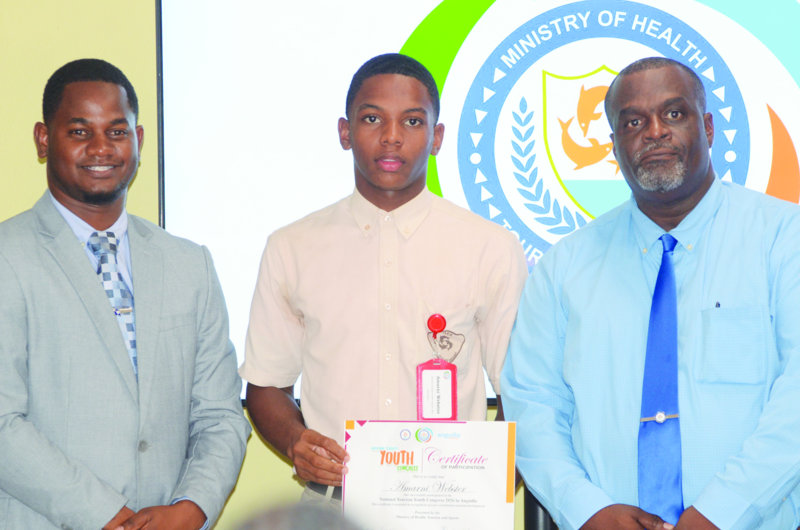
Amarni Webster boldly challenged traditional models of Caribbean tourism. Arguing that the issue is not tourism itself but how it is practised, he introduced “The Three New S’s” — Smart Technology, Sustainability and Social Inclusion. His proposal for a regeneration fund, supported by visitor contributions, aimed to ensure that tourism gives back to the island rather than depleting it, while also calling for greater local ownership to keep economic benefits within Anguilla.
Equally compelling was Kyshaun Connor’s vision of a digitally transformed tourism sector. He painted a picture of seamless travel, where visitors complete immigration processes before arrival and move efficiently through airports using advanced systems such as facial recognition. Importantly, he stressed that technology should enhance, not replace, Anguilla’s hallmark hospitality.
L’Qree Hodge brought attention to what she described as a critical gap — Anguilla’s limited digital visibility. She argued that even the most beautiful destinations risk being overlooked without a strong online presence. Her proposal included a comprehensive tourism app designed to allow visitors to plan and experience their stay entirely through one digital platform.
Expanding on the same theme, Nicalleah Millington outlined the practical benefits of digital transformation, from improved efficiency to increased global competitiveness. She made it clear that embracing technology is no longer optional, but essential for Anguilla to remain relevant in an evolving tourism landscape.
Meanwhile, Reanne Richardson shifted the focus to culture, presenting a powerful case for heritage tourism. Her concept, “Anguilla Beyond the Beach”, sought to immerse visitors in authentic cultural experiences, from boat building to salt picking, while her proposed “Scanguilla” app would gamify exploration of the island. She emphasised that preserving heritage is not only about identity, but also about creating sustainable economic opportunities.
Throughout the competition, participants demonstrated not only knowledge of tourism trends but also a clear understanding of Anguilla’s unique challenges and opportunities. Their responses in the mystery question segment further highlighted their ability to think quickly and articulate innovative solutions under pressure.
Adding a reflective note to the day, outgoing Junior Minister of Tourism Ms. Aiyah Jones shared her personal journey, describing the role as one that transformed her confidence and perspective. “When I first stepped into this role, I thought it was about standing on a stage. Now I know it was about finding my voice,” she said, encouraging participants to embrace the experience as a stepping stone for growth.
Following a closely contested competition, head judge, Stanley Reid, announced Amarni Webster as the new Junior Minister of Tourism, with Reanne Richardson named as alternate. Both will play a key role in representing Anguilla at the Regional Tourism Youth Congress scheduled to take place in Guyana from 5th October to 9th October 2026.
In congratulatory remarks, Ministerial Assistant Jeison Bryan captured the significance of the moment. “Today is not just about speeches or presentations. It’s about vision, leadership, and possibility,” he said. He praised the participants for demonstrating “confidence, critical thinking, and a deep understanding of the role tourism plays in national development,” adding that their contributions signal a promising future for the island.
By Janissa Fleming