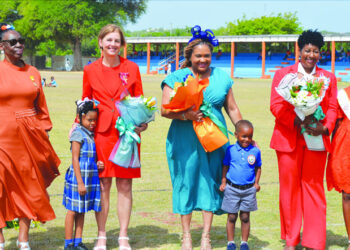
Anguilla, like many other countries in the world, will be having activities for World Down Syndrome Day on 21st March. It is a day set aside by the United Nations to help raise awareness of what Down Syndrome is, what it means to have Down Syndrome, and how people with Down Syndrome play a vital role in our lives and communities.
What is Down Syndrome?
Down Syndrome, also called Down’s Syndrome or Trisomy 21 or T21, is a chromosomal (genetic) disorder caused by an error in cell division that results in an extra 21st chromosome. The condition leads to impairments in both cognitive ability and physical growth that range from mild to moderate developmental disabilities. Down Syndrome is the most common genetic chromosomal disorder and cause of learning disabilities in children. Many babies born with Down Syndrome are diagnosed with the condition after birth and are likely to have:
• reduced muscle tone leading to floppiness (hypotonia)
• eyes that slant upwards and outwards
• a small mouth with a protruding tongue
• a flat back of the head
• below-average weight and length at birth
Although children with Down Syndrome share some common physical characteristics, they do not all look the same. A child with Down syndrome will look more like his/her mother, father or other family members than other children with the syndrome. Individuals with Down Syndrome also vary in personality and ability. Everyone born with Down Syndrome will have a degree of learning disability, but the level of disability will be different for each individual.
What causes Down Syndrome?
Human cells normally contain 23 pairs of chromosomes. One chromosome in each pair comes from your father, the other from your mother. Down Syndrome results when abnormal cell division involving chromosome 21 occurs. These cell division abnormalities result in extra genetic material from chromosome 21, which is responsible for the characteristic features and developmental problems of Down Syndrome.
In the vast majority of cases, this is not inherited and is simply the result of a one-off genetic change in the sperm or egg.
There is a small chance of having a child with Down Syndrome with every pregnancy, but the likelihood increases with the age of the mother. For example, a woman who is 20 has about a 1 in 1,500 chance of having a baby with the condition, while a woman who is 40 has a 1 in 100 chance.
There is no evidence that anything done before or during pregnancy increases or decreases the chance of having a child with Down Syndrome.
There are no known behavioural or environmental factors that cause Down syndrome.
Symptoms of Down Syndrome
Each person with Down Syndrome is an individual — intellectual and developmental problems range from mild to moderate, and some people are healthy while others have severe health problems such as serious heart defects.
Children with Down Syndrome have a distinct facial appearance. Though not all children with Down Syndrome have the same features, some of the more common features are:
• Flattened facial features
• Small head
• Short neck
• Protruding tongue
• Upward slanting eyes, unusual for the child’s ethnic group
• Unusually shaped or small ears
• Poor muscle tone
• Broad, short hands with a single crease in the palm
• Relatively short fingers and small hands and feet
• Excessive flexibility
• Tiny white spots on the coloured part (iris) of the eye called Brushfield spots
• Short height
Screening tests during pregnancy
Various tests are used during pregnancy for Down Syndrome. Although screening tests are not perfect, they can help the parents make decisions about more-specific diagnostic tests, and the course of the pregnancy.
Various screening tests can help identify whether you have a high risk of carrying a baby with Down Syndrome, but they cannot identify whether your baby has Down Syndrome. Your healthcare provider will discuss these and other investigations during the antenatal period, and is yet another reason for pregnant women to see their obstetrician very early during their pregnancy.
Complications
Children with Down Syndrome can have a variety of complications, some of which become more prominent as they get older, such as: heart defects, leukemia, sleep apnoea, obesity, and infectious diseases like pneumonia.
Life expectancy
Life spans have increased dramatically for people with Down syndrome. In 1910, a baby born with Down Syndrome often did not live to age 10. Today, someone with Down Syndrome can expect to live to age 60 and beyond, depending on the severity of health problem. Most people with Down Syndrome live with their families or independently, go to mainstream schools, read and write, and have jobs. People with Down Syndrome can live fulfilling lives.
Conclusion
Down Syndrome is a congenital disorder arising from a chromosome defect, causing intellectual impairment and physical abnormalities including short stature and a broad facial profile. There is a small chance of having a child with Down Syndrome with every pregnancy, but the likelihood increases with the age of the mother. During a pregnancy, there are several screening tests and diagnostic tests for Down Syndrome. Your obstetrician/gynaecologist can discuss the types of tests, advantages and disadvantages, benefits and risks, and the meaning of your results. If appropriate, your provider may recommend that you talk to a genetics counselor. Down Syndrome is a lifelong condition but, with care and support, children who have Down Syndrome can grow up to have healthy, happy, productive lives.
Ask Your Doctor is a health education column and is not a substitute for medical advice from your physician. The reader should consult his or her physician for specific information concerning specific medical conditions. While all reasonable efforts have been made to ensure that all information presented is accurate, as research and development in the medical field are ongoing, it is possible that new findings may supersede some data presented.
Dr Brett Hodge MB BS DGO MRCOG, is an Obstetrician/Gynaecologist and Family Doctor who has over thirty-two years in clinical practice. Dr Hodge has a medical practice in The Johnson Building in The Valley (Tel: 264 4975828).