 There are some events that lose very little when viewed through a screen.
Miss Anguilla isn’t one of them.
For years, I’d watched the pageant the same way many others did — through livestreams (once they became available), highlight clips and social media posts. The camera always seemed to show everything that mattered: the introductions, the walks, the gowns and, eventually, the winner.
It turns out it was only telling half the story.

The first thing that struck me wasn’t what I saw — it was what I heard.
 Not just the music or the emcees, but the horns blaring from every corner of the Landsome Bowl Cultural Centre. The supporters yelling themselves hoarse every time their contestant appeared. The spontaneous applause before a contestant had even reached centre stage. The constant chatter between segments as everyone quietly—or not so quietly—started building their own scorecards.
By the end of Part I, the judges weren’t the only ones making decisions.
The audience had already picked its favourites.
Somewhere in the mix came whispers of “sabotage”—because, let’s be honest, no major Anguillian event feels complete without at least one conspiracy theory making the rounds. Whether anyone believed it was almost beside the point. It simply became another layer of the night’s entertainment.
But what stayed with me wasn’t just the atmosphere. It was how differently the pageant unfolded when I was in the room.
 Photos and videos preserve the big moments. Being there makes you notice everything in between.
You notice the way each contestant pauses before beginning her introduction. You notice how one confident walk can say as much as a speech. You notice how the lighting changes with every segment, how the music lifts the energy, and how contestants disappear backstage only to return minutes later transformed for the next presentation.
The glamour belongs to the contestants.
The experience belongs to everyone in the room.
Part I centred on introductions, swimwear and ambassadorial wear, and each revealed something different about the contestants.
The swimsuit segment was, unsurprisingly, one of the night’s most anticipated. Cameras capture the outfits, but standing a few rows from the stage, it became obvious that the crowd wasn’t reacting to swimsuits alone. They were responding to confidence.
Every contestant walked differently. Some owned the stage with bold energy. Others relied on quiet elegance. None tried to be the same, and that individuality was what made the segment engaging. The loudest cheers weren’t necessarily for the flashiest look, but for the contestant who looked most at ease under the spotlight.
Then came the ambassadorial wear segment, which, for me, became the heart of the evening.
These weren’t simply elaborate costumes.
They were stories.
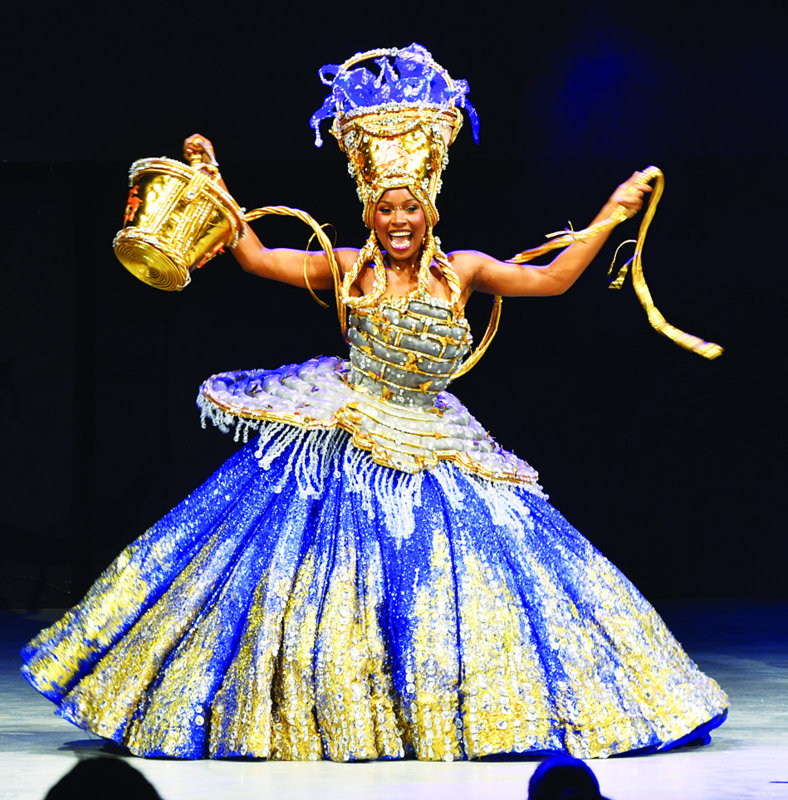
Contestant #1, Akéma Carty, honoured the generations of Anguillian women who carried buckets of water on their heads from village wells. It was a tribute to resilience, sacrifice and the quiet strength that sustained communities long before modern conveniences.
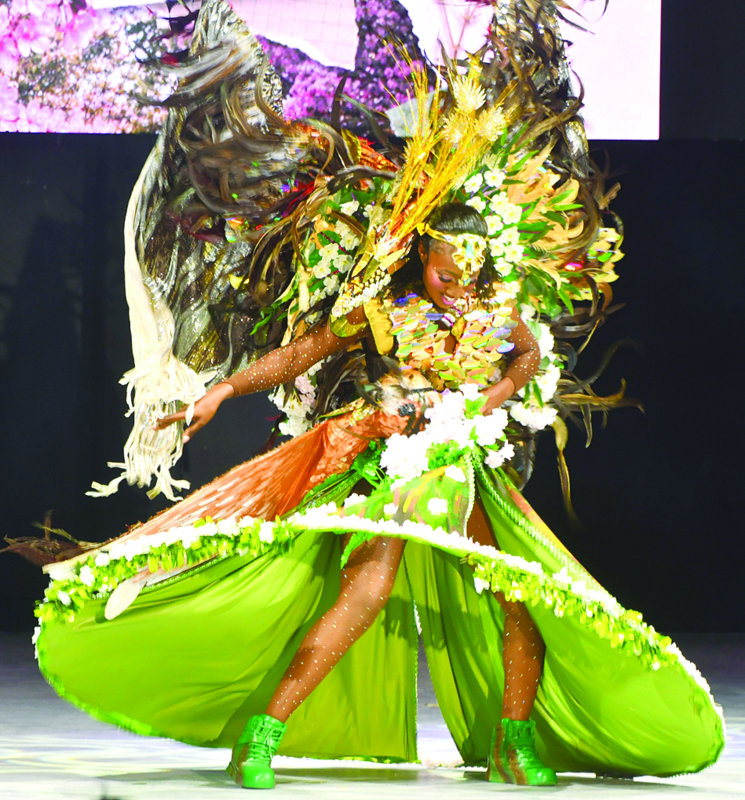
 Contestant #2, Sharianne Francis, looked to two of Anguilla’s national symbols, the turtle dove and the white cedar, transforming them into a graceful celebration of the island’s natural identity.
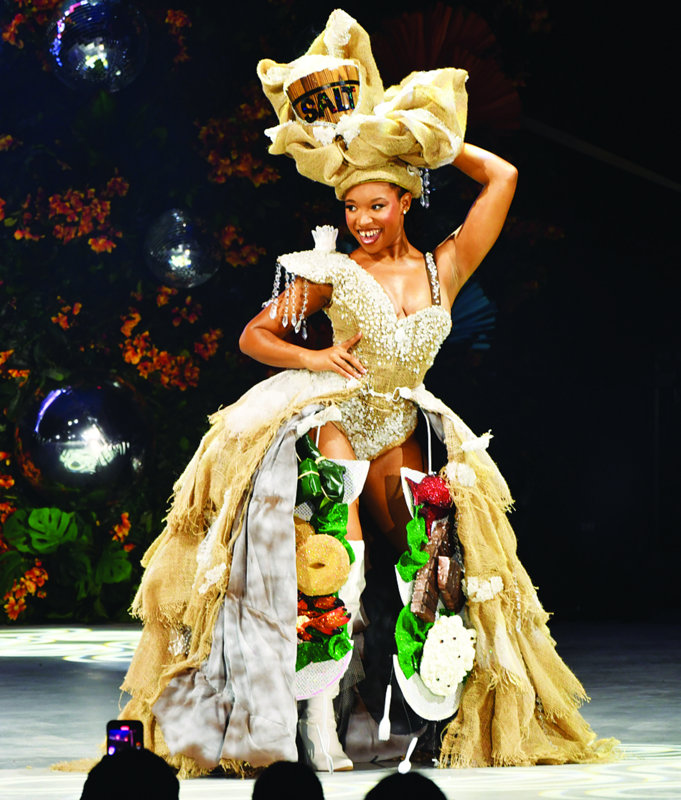
Amelia Olivaccé, contestant #3, paid tribute to Anguilla’s salt-picking heritage, reminding the audience of an industry that shaped the island’s economy, culture and way of life.
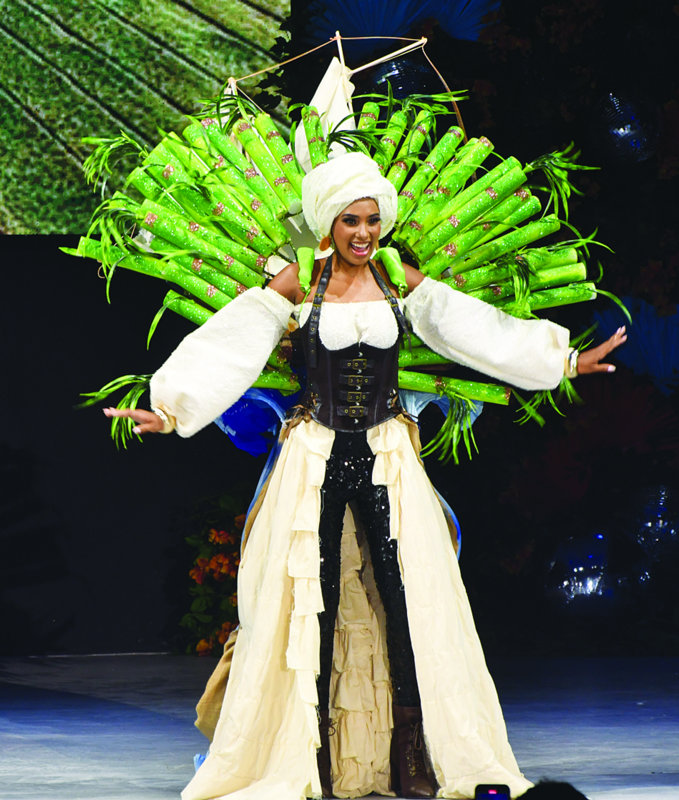
The pageant’s fourth contestant, Ashelly Derich celebrated bamboo craftsmanship and boat racing, weaving together two traditions that speak to Anguillian ingenuity and our enduring love for the national sport.
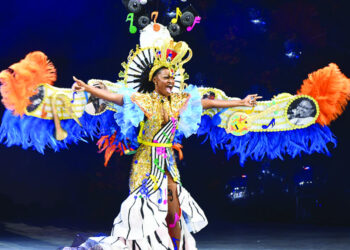
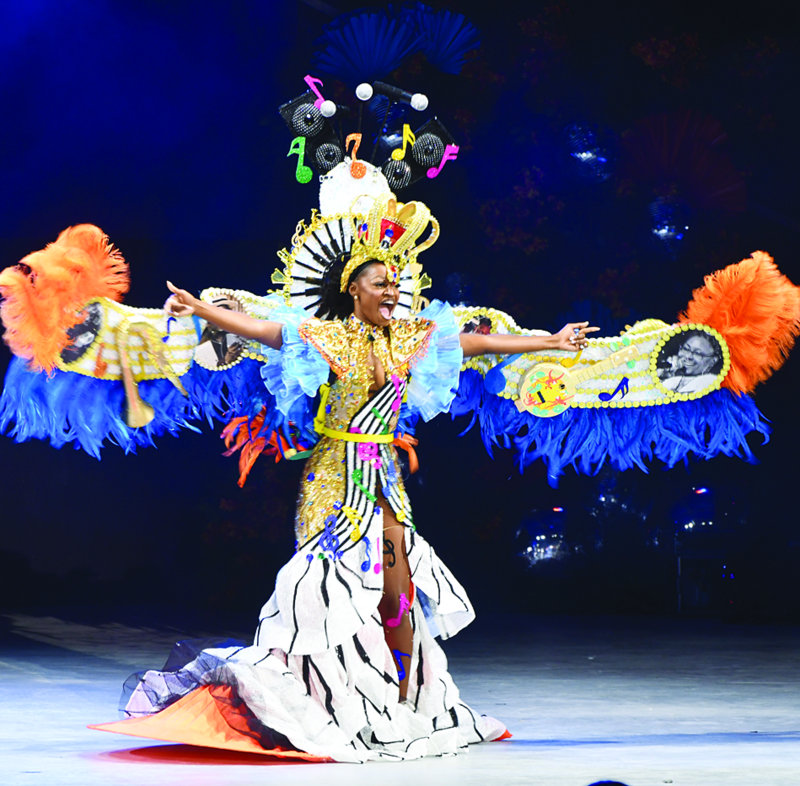
Finally, contestant #5, Kishante Connor-Carty, honoured Anguilla’s music pioneers, paying tribute to the voices that have entertained us, challenged us and preserved our stories through music.
Seen individually, they were striking.
Seen together, they became something more.
It made me realise that fashion has always been a form of storytelling. We spend so much time asking which outfit was the most beautiful when perhaps the better question is: which story stayed with you?
 The ambassadorial wear wasn’t asking us to admire fabric.
It was asking us to remember.
For a few minutes, Anguilla’s history wasn’t tucked away in museums or history books. It was moving across the stage — through salt, bamboo, music, nature and the women whose labour helped shape this island.
That’s the part a photograph can’t fully explain.
It can show you a costume.
It can’t tell you why a bucket of water, a handful of salt or the silhouette of a turtle dove means something to Anguillians. That’s why details of each outfit is introduced before it’s revealed on stage. The audience isn’t simply looking at fabric and sequins; it’s watching history, culture and identity take shape under the spotlight.
Social media will always give us the best angles, the sharpest images and the polished recap.
But after finally attending Miss Anguilla in person, I realised the pageant isn’t just about what happens under the spotlight.
It’s about what those moments represent.
The cameras capture the contestants. The stories are what stay with you long after the lights go down.
When the contestants return to the stage on Wednesday, August 5, they will be competing for the Miss Anguilla 2026 crown. But the evening will be about more than a winner. It will be another opportunity to watch five young women carry themselves and Anguilla’s story with confidence under the spotlight.
By Janissa Fleming