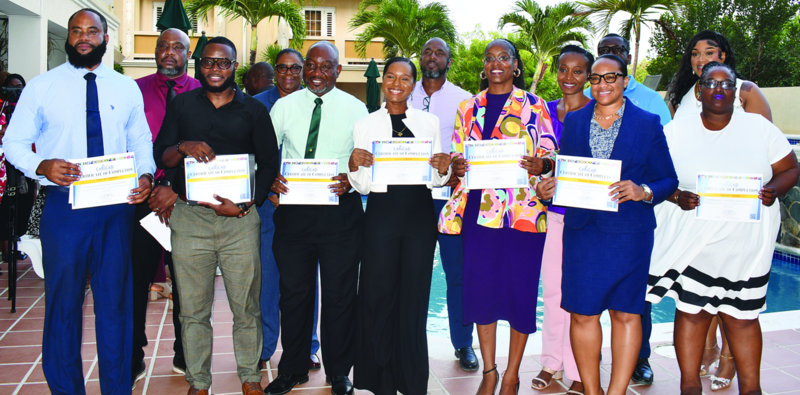
The graduation of the first cohort of the Caribbean Centre for Development Administration (CARICAD) Leadership Development Programme, held on Thursday 9th July 2026, marked a significant milestone in Anguilla’s ongoing public service reform, celebrating 20 public officers who have spent months strengthening not only their professional skills, but their capacity to lead meaningful change.
Held as CARICAD also celebrated its 45th year and convened regional board members in Anguilla, the ceremony reflected a wider message: that investing in people is one of the most important investments any government can make. Public service transformation is not simply about new systems or policies; it begins with people willing to challenge themselves before asking others to change.
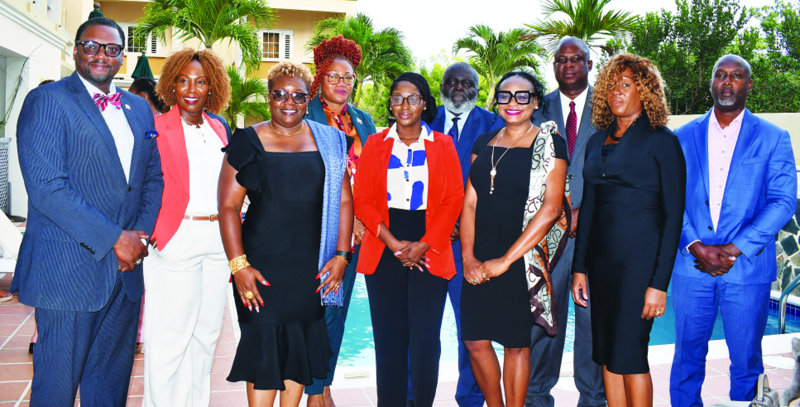
Public Service Reform Advisor Dr. Kelly Clark described leadership development as an essential pillar of Anguilla’s ambitious reform agenda rather than an optional extra. Congratulating the graduates, she noted that the programme represented one of the earliest priorities in the reform process because meaningful transformation depends on leaders who are prepared to champion change while supporting those around them.

The programme itself was anything but a traditional classroom exercise.
Led by CARICAD’s Leadership Development and Institutional Strengthening Specialist, Dr. Lois Parkes, participants worked through months of intensive learning that blended face-to-face sessions with virtual training, executive coaching and collaborative action-learning projects focused on real challenges facing the Anguilla Public Service.
Participants explored topics ranging from emotional intelligence and resilience to strategic planning, stakeholder engagement, project management and organisational culture. Rather than rushing towards solutions, teams were challenged to examine the root causes behind issues such as customer service, performance management, leadership succession and accountability.
Perhaps most encouraging, Dr. Parkes said, was that the graduates’ recommendations reflected not only careful research but a genuine personal commitment to improving the public service. The next cohort is expected to begin in August 2026, with the first graduates continuing alongside them as mentors, ensuring the work already started continues to gather momentum.
CARICAD Executive Director Devon Rowe reminded graduates that meaningful reform is rarely straightforward.
“Typically, people say, ‘It is what it is.’ I challenge you to say, ‘It is what it will be.'” he said, encouraging participants to help create a future “for which all Anguillans will be proud.”
His remarks acknowledged that transformation would inevitably encounter obstacles but stressed that strong leadership at every level would be the deciding factor in overcoming them.
The Honourable Deputy Governor Perin Bradley praised both the graduates and CARICAD’s partnership, noting that the programme had already exceeded expectations. The Deputy Governor said he was being particularly encouraged by the practical recommendations produced through the action-learning projects and looked forward to seeing many of those ideas translated into real improvements across government.
Hon. Minister Shellya Rogers-Webster challenged the graduates to resist becoming guardians of outdated practices.
“It means removing the phrase ‘We’ve always done it this way’ from your vocabulary,” she said, encouraging leaders to replace it with continuous improvement while recognising and replicating examples of excellence already found throughout the public service.
Her Excellency the Governor Julia Crouch echoed those sentiments, describing the initiative as “a leadership programme with a purpose.” Acknowledging that change is often uncomfortable, she said successful transformation ultimately depends on leaders who can inspire confidence while helping others navigate uncertainty.
One of the most memorable moments of the afternoon came not during a speech, but through poetry. Farrah Banks, Director of Information and Broadcasting and a member of Cohort One, brought warmth, humour and unmistakable Anguillian flavour to the ceremony with her performance of The Rapper.
Her lively poem encouraged young people to read widely, embrace education and remain authentic, while also celebrating the importance of preserving Anguilla’s own linguistic identity. It drew appreciative laughter and applause from the audience, offering a reminder that leadership also involves inspiring others through culture and creativity.
Certificates were presented to members of Cohort One, representing departments and agencies across the public service, bringing months of learning to a proud conclusion.
Speaking on behalf of the graduates, Comptroller of Inland Revenue Lonnie Hobson delivered the ceremony’s most thoughtful reflections.
Before beginning his address, he invited his fellow graduates to stand and simply look around the room.
“What you see are not just your colleagues [but rather those] who have wrestled with difficult conversations… people who chose growth over comfort.”
His speech shifted the focus away from certificates and titles, describing the programme as an opportunity to learn first how to lead oneself before attempting to lead others.
“The certificates we receive today are not proof that we have arrived,” he said. “They are reminders that we have accepted a greater responsibility.”
He closed by leading the graduates in a collective leadership pledge before the room echoed the words that became something of an unofficial theme for the ceremony: “Together we lead. Together we serve. Together we transform.”
Yet despite the applause and celebration, the prevailing feeling leaving the ceremony was that this was only the beginning.
For Anguilla, where conversations about modernising public services increasingly centre on improving the experience of citizens, the graduation represented more than professional development. It reflected an investment in the people responsible for delivering those services every day to help shape a stronger, more responsive and more resilient public service for Anguilla’s future.
By Janissa Fleming