On the evening of Tuesday, January 27th, a public consultation meeting was held to discuss an amendment to the Law on Rape to include legislation against rape in a marital setting.
The discussion focused on sexual violence and the legal treatment of “rape” within marriage. Religious leaders were among the attendees sharing their concerns and posing questions about the proposed changes to the Law.
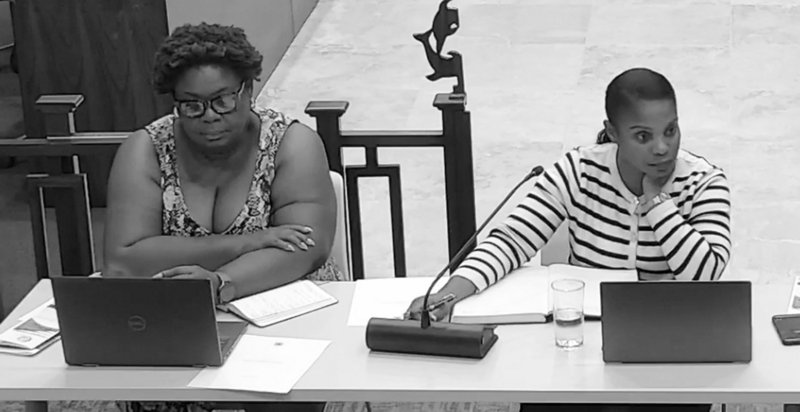
The discussions were facilitated by the Hon. Minister of Social Development, Shellya Rogers-Webster; Permanent Secretary, Dr. Bonnie Richardson-Lake; Principal Assistant Secretary, Joselyne Johnson; and Gender Affairs Development Coordinator, Kemoloy Murphy.
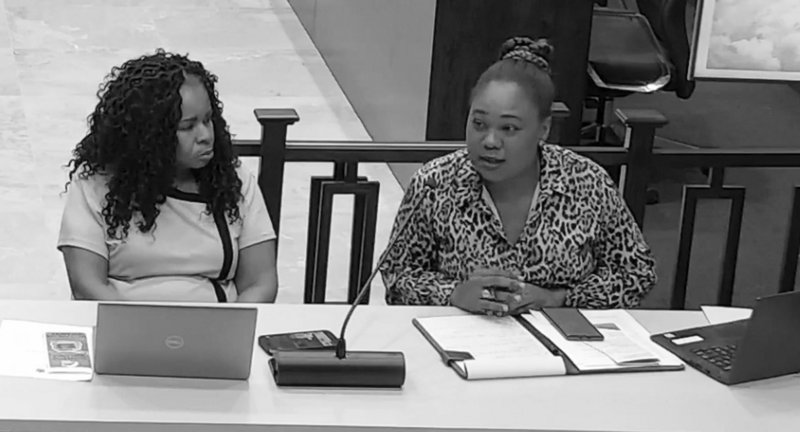
Ms. Murphy outlined the current legal framework as it pertains to marital rape and went through the proposed amendments. She said the existing Criminal Code creates an inconsistent framework for addressing sexual violence, treating married and unmarried survivors differently under the Law.
Section 162 of the Criminal Code defines rape, but it does not explicitly state whether this definition applies to offensive sexual violence committed within marriage, creating significant legal ambiguity.
Section 166 further complicates the issue by establishing a separate lesser offence, specifically for sexual assault within marriage. This distinction implies that there are different standards relative to married and unmarried individuals. The result is unequal protection under the Law, where marriage survivors receive a reduced legal safeguard, while the perpetrators within marriage face less accountability than those who commit similar acts outside of marriage.
She highlighted the unfortunate rape cases that persist between husbands and wives: “In Anguilla we are having challenges,” she said, “as it with regard to domestic violence and intimate partner violence. We do recognize that there is a human cost as to the uncertainty and the minimized harm that is considered based on marital status, as it pertains to the current legal framework.”
“We have seen an increase in reported incidents of domestic violence on the island,” she said. “Data from the Royal Anguilla Police Force shows that in 2018 one out of four cases reported involved husbands and wives. We recognize that this data is about ten times less than what is currently experienced in actuality today.”
“We also recognize,” she added, “that due to our current legal framework, persons within marriages may not report incidents of sexual violence. This is so for persons outside of marriage as well. There is still that stigma of fear that creates a barrier to reporting.
“We are currently doing work in terms of our domestic violence legislation,” she noted. “In 2015 we did pass the Domestic Violence Act which in fact recognizes sexual violence such as rape. This Act recognizes rape within all relationship types including marriages.”
Ms. Murphy said that the Act also affirms that every person has the fundamental right to live free from violence, regardless of their relationship status, or the relationship of the survivor to the perpetrator. “But while we have these protections in our Domestic Violence Act, our Criminal Code contradicts the Act,” she noted.
“The proposed amendments therefore, would be to alter Section 162 to clarify that the offense of rape includes sexually offensive acts that are committed within marriage. This will eliminate any confusion as to whether or not our definition of rape refers to marital rape,” Ms Murphy emphasized.
She said that the amendment to the criminal code is essential because it affords equality before the Law, affirms bodily autonomy and dignity, removes legal inconsistencies and ensures equal access to justice for all.
The Government hopes to bring the Bill back to the House in short order, although no definite date has yet been set. Members of the public will still have an opportunity to contribute to the ongoing discussion on the proposed amendment.