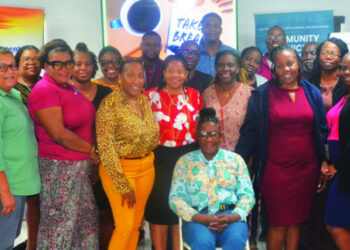
Campus Q of the Albena Lake-Hodge Comprehensive School (ALHCS) transformed into a hub of youthful innovation on Tuesday, 18th November 2025, as the annual Business Idea Basket Competition returned under the theme “Leveraging Agriculture to Enhance Anguilla’s Economy”. Held fittingly during Global Entrepreneurship Week, the event was sponsored by the Anguilla Youth Business Foundation and chaired by Mrs. Lois Hazell.
With an audience that included THE Hon. Acting Governor Perin Bradley, Hon. Ministers Kyle Hodge and Shellya Rogers-Webster, Chief Education Officer Mr Bren Romney, ALHCS staff, students, parents and supporters, the competition celebrated not only ideas but the future thinkers capable of reshaping Anguilla’s development path.

In her welcome remarks, Mrs. Hazell reminded attendees that the island’s youth continue to be an under-utilised resource in national planning. She underscored that Anguilla faces “simultaneous growth and developmental challenges,” but the island’s “youthful creativity and innovation” could help build a future that is economically strong, environmentally balanced and technologically progressive. The competition, she said, exists to cultivate that potential and provide a platform where young minds can contribute directly to solving the island’s challenges.

Mrs. Hazell also noted that Anguilla’s youth remain an under-utilised resource in national planning. She stressed that while the island faces “simultaneous growth and developmental challenges,” its “youthful creativity and innovation” can help build a stronger, balanced and technologically progressive future. The competition, she said, provides a platform for young minds to contribute directly to real national issues.
Students from Years Three to Six formed teams of three to five members — each group including at least two business students — and delivered 10–12 minute pitches supported by models, research and financial projections. Judges Quincia Gumbs-Marie, Carencia Rouse, Cathy Wallace, Minister Kyle Hodge and Shane Smith scored creativity, innovation, aesthetics, economic value and environmental friendliness for a total of 50 points. Prizes included laptops for first place, tablets for second, and paid exam fees for third, along with special awards for Best Presentation, Best Business Idea to Execute and the Beyond Extraordinary Idea.
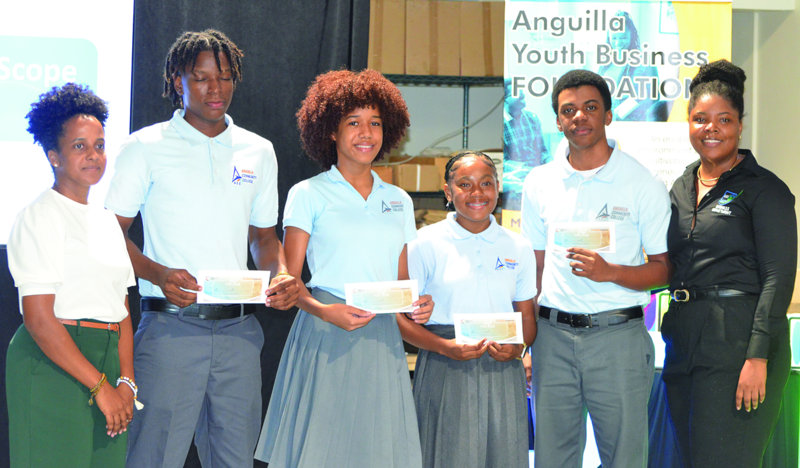
Agriscope — Dneari Gumbs, Keante Brooks, Ayanna Carty and Abigail Campbell — opened with one of the evening’s most futuristic concepts: the Agridome, a floating, fully automated hydroponic farm designed for Anguilla’s ponds and wetlands. Using solar-powered geodesic domes equipped with sensors and natural desalination, the system “looks beyond the soil” to address drought and limited arable land. They projected a startup cost of US$18,000 for ten pods and annual revenue of US$358,000 through supermarket and hotel partnerships. Judges praised the ambition and use of AI but questioned environmental impacts and data processing needs. The team explained that salt would be manually removed and that monitoring systems would rely on outsourced computing power to avoid local strain.
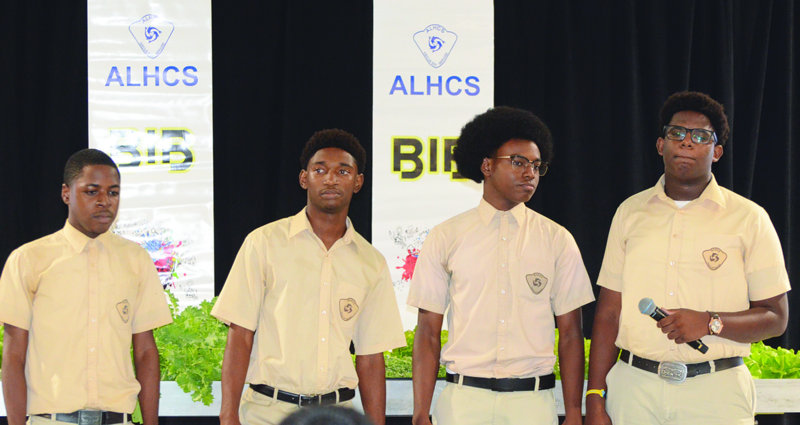
Ecosphere — Zakkai Lake, Jamyoi Hodge, Matthew Gumbs-Fleming, Barry Telemaque and Tajai Liddie — presented a solar-powered dome integrating hydroponics and aquaponics, centred on a tilapia tank feeding vertical hydroponic towers in a closed loop. Inspired by regional models, they positioned Ecosphere as a youth-led enterprise, tackling food insecurity while creating employment. The projected cost was US$110,000 with expected annual revenue of about US$60,000, reaching profitability in four to five years. Judges questioned temperature regulation for plants and fish. The team assured them that tilapia are “extremely resilient” and confirmed oversight by a supervisor.
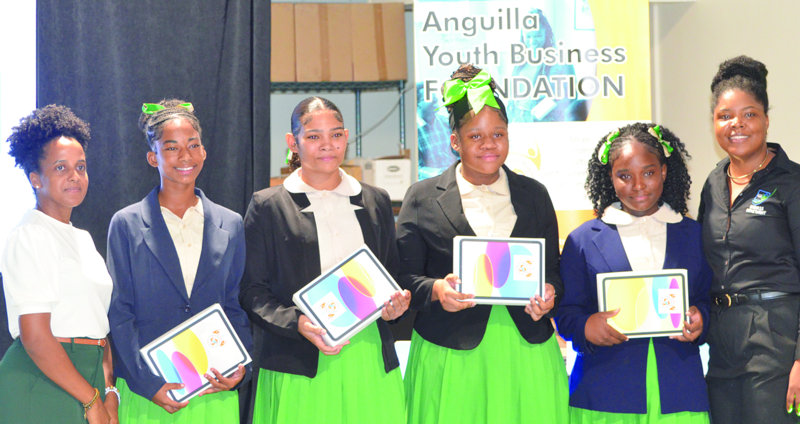
Apex Innovations — Tsehai Carty, Keyara Hodge, Reanne Richardson and Samantha McCormack — pitched Anguilla Aqua Greens, a solar-powered controlled-environment agriculture facility producing herbs, leafy greens, microgreens and peppers. Drawing on lessons from Hurricane Irma and the COVID-19 supply delays, they projected first-year profitability and outlined funding possibilities through government concessions, Resembid (£292,692), the Caribbean Development Bank and private contributions. With IoT-driven monitoring and 90–95% water recycling, the team emphasised adaptability: “We grow with the flow — because agriculture must adapt if Anguilla is to secure its future.” Judges questioned their use of fertile land in the Valley Bottom; the team said the site offered ideal space and existing agricultural activity, and clarified their stance on fertiliser imports.
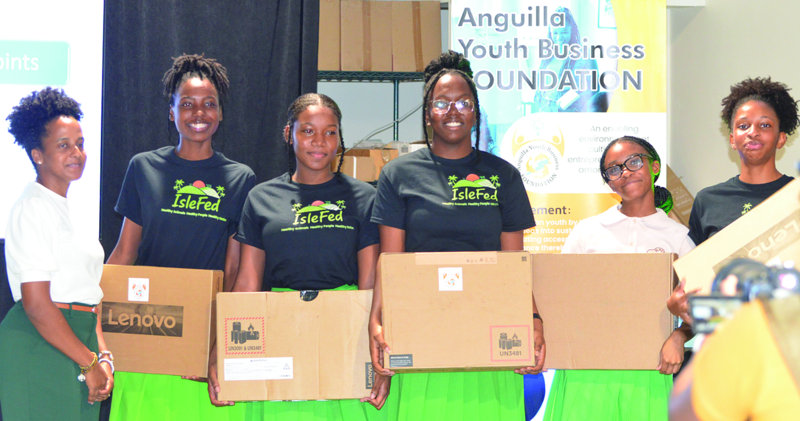
IsleFed — Senaiya Richardson, Kishanece Edwards, Delecia Harrigan, Zariah Roach and Mishelle Leader — closed the competition with a national free-range livestock initiative aimed at reducing meat imports and strengthening food sovereignty. Their environmentally sensitive model targeted hotels and local markets. Judge Trevor Hodge praised the proposal’s grounding in real national needs, saying: “You’ve identified a gap that genuinely exists in our economy and proposed a solution with clear national impact.”
As the judges deliberated, Anguilla Youth Business Foundation representative Demi Proctor encouraged students to recognise the value of their creativity and reminded them that “you do not have to build your ideas alone,” highlighting Innovate Anguilla as a space where young people can learn, test ideas and access support. She urged them to stay curious, keep asking for help and take their ideas seriously, especially during Global Entrepreneurship Week.
ALHCS Principal Dr. Trevor Hodge then praised the students’ ingenuity and hard work, noting that the Business Idea Basket Competition has evolved into a true celebration of entrepreneurship, creativity, and forward-thinking leadership. He commended every participant as a winner for gaining essential skills in planning, problem-solving and confident presentation. He closed by applauding the students, teachers, and supporters, urging the youth to “keep dreaming boldly, keep thinking critically, and keep pushing the boundaries.”
After deliberation, the judges announced the 2025 winners: 1st Place – IsleFed; 2nd Place – Apex Innovations; and 3rd Place – Agriscope. IsleFed received commendation for national relevance and strong economic grounding.
As the evening closed, Mrs. Hazell applauded all the teams, noting that the competition reflected the brilliance and potential of Anguilla’s next generation. She remarked: “Their ideas may be young, but their impact could be national. This is the future of Anguilla — imagining boldly, innovating bravely.”