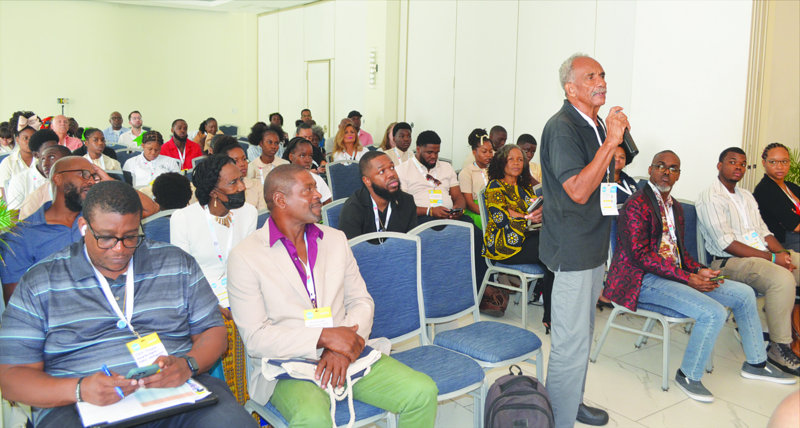
Anguilla hosted the first-ever Music Tourism Convention to be held in the Caribbean. The landmark gathering, staged at the Aurora Anguilla Resort & Golf Club from 5th – 6th November 2025, brought together international and Caribbean leaders in culture, tourism, and the creative industries. Organised by the Government of Anguilla — through the Department of Youth and Culture — in partnership with Music Cities Events and Sound Diplomacy, the two-day event signalled Anguilla’s intention to position music not only as entertainment, but as a strategic economic force.
“This convention marks an exciting new chapter for Anguilla — one where the worlds of music and tourism meet not by coincidence, but by design,” said the Hon. Minister of Health, Tourism & Sports, Cardigan Connor, in his welcome remarks. “Visitors are no longer just looking for places to stay; they are seeking places that move them… And in that sense, Anguilla is already blessed. Music is woven into the very soul of this island.”

 He added that building a sustainable creative economy requires more than hosting events. It requires policy, infrastructure, training, and investment. “[The Government of Anguilla] is fully committed to developing the framework that supports this growth… to ensure that Anguilla continues to be recognised not only for its beauty and hospitality, but for its vibrant cultural pulse.”
The convention arrived at a time when global music tourism is booming. From “gig tripping” to cities transformed by superstar residencies, the global music tourism market — valued at US$5.5 billion in 2022 — is projected to double by 2032. In the Caribbean, where icons from Bob Marley to Rihanna have long shaped global perceptions, music remains one of the region’s most powerful cultural exports.
The convention’s first major panel, “Anguilla Music Ecosystem – Where Are We Now?”, moderated by Bonnie Richardson-Lake, dug into the realities of Anguilla’s creative landscape. The conversation brought together four major figures: veteran musician Bankie Banx, producer and entrepreneur Davon Carty, artist Rebecca “Queen B” Webster, and owner of 360 Artistry Ivan Berry.
Their verdict was clear: Anguilla has talent, history, and heart — but not yet a functioning music industry.
“In Anguilla, we have a brilliant entertainment scene,” Ivan said plainly. “We do not have a music industry. We do not have an industry that’s the business of music.” He argued that heavy reliance on hotel gigs, where performers often sing mostly cover songs, can limit artistic growth. “When you spend a lot of time performing in hotels, your performance becomes very cruise-ship-ish… the songs don’t have the level of edge and creativity it takes to be really successful.”
Bankie Banx agreed, saying Anguilla already has all the ingredients but lacks structure and investment. “We’re not putting the resources in the right places,” he said. “There are no lighting engineers. No performing arts centre. No hotel on this island has a stage for a band.”
Queen B offered a frontline perspective, balancing realism with pride. “I am one of those hotel singers… but I bring much of myself,” she said. Still, she acknowledged that Anguilla is “absolutely not where we should be,” calling for greater professionalism, copyright protection, and mentorship for young performers.
Davon recounted his journey with British Dependency, a band that fought to perform original music in venues dominated by guest preferences for familiar tunes. “I don’t think people understand how important it is to a society — the British Dependencies, the Omaris, the Bankies…how important they are in terms of impacting the youth.”
Across the panel, one consistent message also stood out. Without government support, strategic investment, and education in the business of music, Anguilla risks leaving its creative potential untapped.
Ivan put it bluntly: “All music equipment should be tax and duty free.” He also stressed the need for music business education in schools and mandatory local music quotas for radio — policies used successfully in other Caribbean nations and Canada.
Conversation often returned to a deeper issue: the way society perceives its own creatives. “I toured with a band called British Dependency. When I come back home, there’s always one question that most Anguillians ask me: ‘Them had like aya?’ Which says a lot. We don’t believe in ourselves,” Davon reflected. “We think the rest of the world doesn’t either. Well, I’m here to say that we are magnificent artists.”
Bankie highlighted another long-standing problem: the undervaluing of musicians. “There is a tendency to think that if you’re an artist or musician… you need another job. They don’t understand the hours of work behind what you see.”
Ivan also noted a functioning music industry relies on far more than singers and performers. He stressed that young people need access to training and pathways not only as artists, but as the lawyers, accountants, publicists, stylists, managers, photographers, and technical professionals who form the backbone of a thriving creative sector. With these roles in place, he explained, Anguilla could foster globally touring artists, export its culture, and generate new streams of foreign revenue.
From infrastructure to mindset, panellists stressed that change requires both community and government engagement—and long-term commitment.
Day 1 also featured a presentation by John Copeland and Connie Kinnard of the Greater Miami Convention and Visitors Bureau, offering insights into how major destinations leverage culture to build global brands.
Kinnard pointed to Miami’s diversity as its cultural engine, noting that music tourism thrives on authentic experiences and local stories. She underscored that music tourism boosts economies not only through major concerts but through the visibility it provides to emerging artists, neighbourhoods, and community spaces. “It’s not limited to large-scale events,” she noted. “It gives the opportunity for the person that plays the saxophone on the corner to elevate.”
For Anguilla, the industry can only grow if the entire ecosystem — artists, venues, promoters, cultural institutions, educators, and government—moves together.
Beyond the headline sessions, the convention also featured an extensive programme of additional panel discussions, workshops, and presentations, including:
• Strengthening Music Tourism in the Caribbean
• Carnivals & Festivals as a Music Tourism Tool
• Music Awards Hosting and Tourism Development
• Bringing Local Music Genres into Tourism Strategies
• Why Professional Music Ecosystems Are the Foundation of Music Tourism in Anguilla
These sessions offered deeper insight into how Anguilla – and other island nations – can collaborate, how cultural celebrations can drive visitor engagement, and how professionalisation within the creative sectors can unlock long-term economic potential. As the Hon. Minister Connor said, “Let us imagine a future where Anguilla’s rhythm becomes part of the global soundtrack of travel and culture.”