This week, we look at migration, the habit of moving from one location to another to take advantage of local opportunities. I have heard that in years past the only real export fromAnguillawere Anguillians. While this was a joke, there is truthin the expression. During lean years, life was incredible difficult onAnguilla. Job opportunities were scarce and there were limited opportunities (except to work as field labourers, salt pickers or fishermen). In 1960, more than 50% of the population was unemployed.

A nation of seafarers, Anguillians recognized that there opportunities off-island. Some Anguillians moved permanently to other islands, North America orEurope,but the majority of Anguillians stood fast to their island. From the late 1890s,Santo Domingoin theDominican Republicoffered seasonal employment for Anguillians who were willing to work in the cane fields. Anguillian boys as young as 11 years old travelled with their male relatives to cut sugar cane. Each worker was paid every 15 days at a rate that averaged 17 cents per ton of cane cut.

The annual migration provided a vital income. The men’s departure relieved pressure to feed a large population. Their return provided an influx of cash which was otherwise impossible to obtain. Despite the low wages and difficult conditions, Anguillians welcomed the work off-island. ‘Macoris! Macoris! God bless Macoris!’ they cried. Changing politics closed the door for Anguillians in the late 1930s and early 1940s to work in theDominican Republic. Moving South, Anguillians found work in the crowded oil refineries in Curacao andAruba.
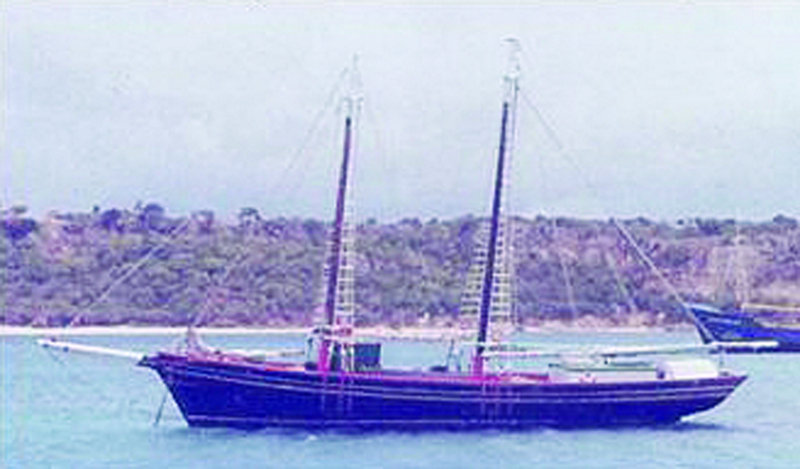
The workers would leave after Christmas each January crowded aboard the island’s schooners. Anguillian schooners like the Warspite, Betsy R, Excelsior Hodge, Yolanda, Ismay and Carmella became household names throughout the Caribbean.British legislation allowed the ships to carry one passenger per ton. Loading the 80 or 90 passengers allowed by law, the ships would cross toSt Martin. Calling at Marigot where the French had no such laws, they would load up to 200 passengers, including many workers from other islands. The trip to theDominican Republicwas usually a quick passage, often taking as little as two days.
Returning home was another story as the ships tacked back and forth against the wind. The voyage could last two weeks or more and conditions were cramped. The faster ships became renowned for quicker journeys, and their names became cemented in Anguilla’s history.On their arrival into Road Bay, the schools would empty as children and families rushed to meet the workers.
Each year this historic migration is re-enacted during Carnival in August. Anguillian boats leave Sandy Ground en-mass. They disappear from sight in the morning… in the evening they return to crowds, cheers and celebration. The fastest boat is awarded a prize.
For more information, there is an excellent book and DVD by David Carty, Nuttin Bafflin, which describes this and other episodes of maritime history ofAnguillain detail. The DVD can be bought at the Drug Store in The Valley.