There’s no question about it. Boat Racing is indeed Anguilla’s national sport. The great majority of the island’s people just love the water. These are they who savour the fun, and relish the frolic of supporting their favorite locally crafted sailing vessel, any day a race is called.
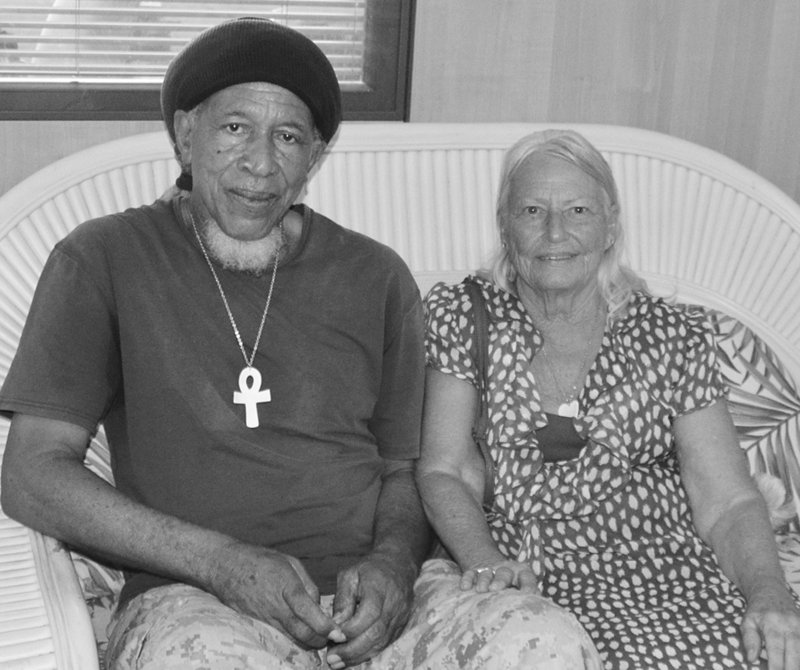
The Anguillian recently chanced to have a conversation with one boating expert in the person of Anguillian-born Iwassie Fleming. He enthusiastically described the skills of manufacturing a good sailing boat, built for speed – one that would settle away with optimum stability and punch on the water.
Iwassie has been involved in Anguilla’s boat building tradition for over 61 years. His love for the craft began when he was 8 years old. At that time, he loved to engage himself in the making of miniature sailboats, using cardboard material. It was a boyhood thrill for him to manufacture his own miniature vessels and race them in the pond at Long Bay.
This early experience sparked within him a fascination for boat building. He and his cousins progressed from cardboard to wooden boats, which they still raced in the ponds, but they were gradually gaining the skills that would lead them to the ocean where new and exciting experiences awaited them.
Iwassie explains that sailing in pond water and ocean water are entirely different experiences, of course. “Pond water is tight,” he said, “offering a more stable, easily controlled environment, whereas the ocean’s looser waters are more challenging. It was in the ocean that Iwassie truly began to understand the science of boat racing.

Though he never fully participated in the craft or captained a vessel, Iwassie’s observations and deep respect for the boat racing sport made him a student of it. He spent time carefully studying the successes and mistakes of others, gathering a lifetime of knowledge which he now shares freely.
When asked about boat building in the early days, Iwassie said that the builders would use a shaped piece of steel as a template. They would then search out grape, white cedar, or pomserrette (Pommerac) trees to match the design.
“Each boat,” he said, “was handmade, from the wooden mast to the hand-plaited rope. The hulls were caulked with oakum, sealed with putty, and planked with white pine. The entire process was hands-on and demanding.”
“In contrast, today’s boats are built using resin and marine plywood,” he noted, “and while the work is faster I think most of the traditional boat building aspects have been lost. The only remaining traditional feature of today’s boats is that they are still open-hulled.”
Boat racing, according to Iwassie, predates his birth. It was not just a pastime, but it was a reflection of the island’s livelihood charted on the seas. Races often occurred along the route from Anguilla to the Dominican Republic and back, adding a layer of competition to the camaraderie of seafaring life. For Iwassie, and many others, boat racing became a passion passed down informally through observation, participation, and hands-on creation.
“Small boats were introduced when Anguillians bought a few boats from St. Kitts to be used for fishing,” he reflected. “We began using sails on those boats and some of the fishermen, after a while, also started racing boats as well. We ended up using these smaller boats for racing. We could easily pull them up on the bay and put our sand bags and ballast rocks in them.”
Over the years, sandbags and ballast rocks were replaced with lead to optimize performance, but the passion and love for the craft remains.
Without formal lessons or storytelling from elders, Iwassie learned the skills as a youth while assisting boat builders in the area from moving ballast, trimming sails, assisting crews, and most importantly, building the boats. With the knowledge gained, he along with his cousins crafted and ran their own boat, even at times sailing a self-built 13-footer to St. Maarten to visit his mother.
For Iwassie, a truly competitive race depends on one thing: “standardization”. He believes strongly that without consistent rules for boat dimensions – length, width, mast height, hull shape – the race becomes about the design, not the sailors. “If you put a pot on the fire and only add water,” he illustrates, “you can’t expect food.” Describing the inconsistency in race boats building today. Some boats are wider, others taller, and without regulations, it’s the hull that competes – not the crew.
He envisions a future where boats must meet specific size and weight guidelines. “This,” he argues, “would level the playing field, shift the competition back to the skill of the captain and crew, and restore integrity to the sport.”
While public interest in boat racing has grown, Iwassie sees a gap between generations. “They love the sport,” he says of the youth, “but they need more conversation with the elders.” He believes understanding tactics and tradition is just as crucial as strength or seamanship.
He shares an example: “if you’re racing and someone rounds the stake behind you, you should break their path and ‘use the ocean to win’. It’s not just about speed; it’s about positioning, wind use, and tactics.”
He notes that many younger sailors race their boats too flat, not understanding how hull angle affects performance. “The bow should be slightly lifted,” he explains. “Let the wind do the work.”
When asked about boat racing among the islands, he noted that Anguillian boats once raced in St. Maarten for holidays like July 14th and 21st, but over time the practice faded due to late race finishes and difficulties faced returning home after the sun was set. He noted that while other Caribbean islands also host races, Anguilla’s open-hulled designs are unique.
Despite its popularity, Iwassie sees one major issue: the physical demands on today’s sailors. “Sailors of yesteryear were bigger in body and stature and they deliberately used their weight to assist with the skill of boat racing. As boats have become larger and wider, more weight is required on board — but today’s youth, often lighter in body weight, struggle to meet those demands.”
Still, Iwassie remains hopeful. His dream? A future where boat racing in Anguilla is guided by clear regulations, mutual respect, and a deeper understanding of its rich heritage.
“If the boats are built consistently,” he says, “with attention to size and design, then the race will be about the men who captain the boats, not the materials.”
Iwassie prides himself in the art of boat racing, and he lays claim to a vast knowledge about boat building. At the end of our jovial interview, his parting words were: “There is a lot more where this came from.” This implies that he has a wide wealth of boat building knowledge, and he is very willing to share it with those who would listen.