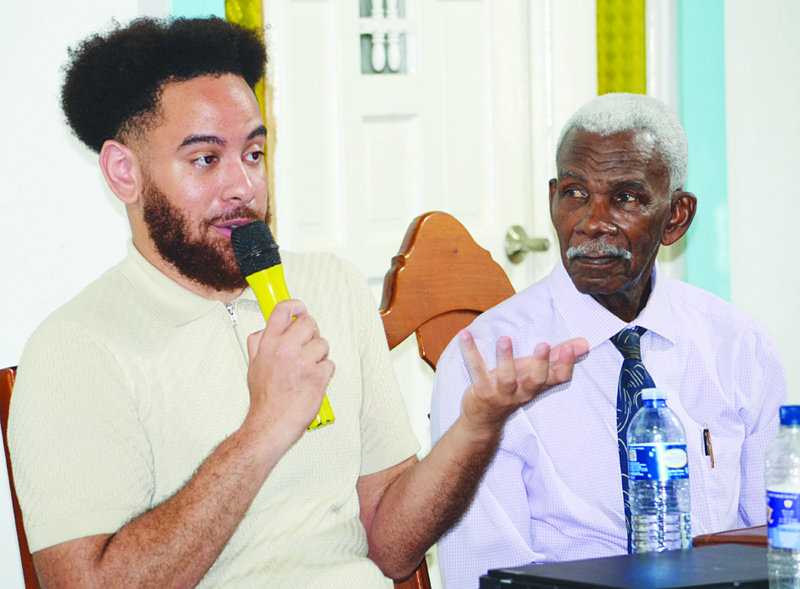
Mr. Felix Fleming
There are moments that demand silence – not out of fear, but reverence. And on the evening of Wednesday, 23rd July 2025, beneath the roof of Ebenezer Methodist Church, silence became a living, breathing participant. The annual Emancipation Lecture was held not only to honour Emancipation Day, but also to mark the remarkable 195th anniversary of the chapel itself.
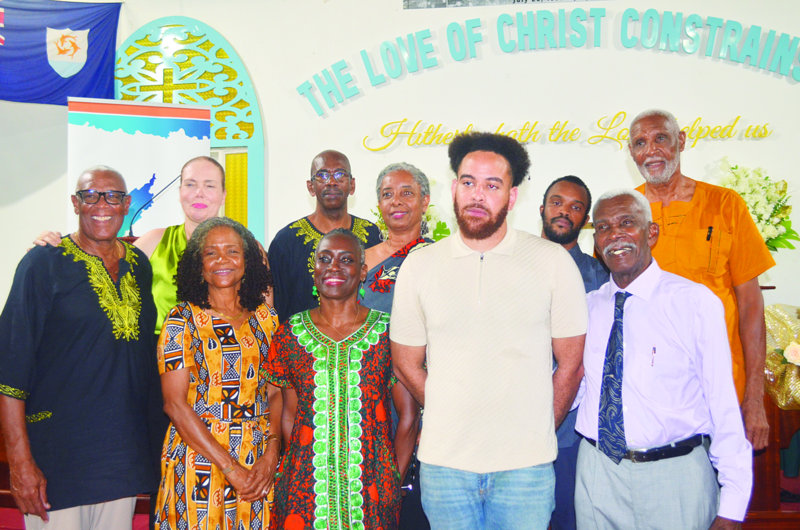
The event gathered a thoughtful crowd: former Premier Mr. Victor Banks, stewards of the Methodist Circuit, community members, representatives of the Malliouhana Poetry Committee, and more – all present to reckon with Anguilla’s past.
Dr. Phyllis Fleming-Banks opened the evening, invoking the late Rev. Dr. Wycherley Gumbs – whose vision sparked the annual lecture series in 2016 – and his steadfast refrain: “Lest we forget.” She added, “We must teach our children from whence we came, lest we forget.”
Chairperson of the event, Ms. Rosanna Browne, echoed this sentiment. “Emancipation is not just a historical milestone. It calls us to remember, to reflect, to renew our commitment to justice, dignity, and equity in our time.”
That call reverberated in the soul-stirring performance of “Over My Head” by the Ebenezer Men’s Fellowship Choir, a Negro spiritual born in the agony of slavery but overflowing with faith, freedom, and fortitude.
 Mr. Elliott Gumbs, son of the late Rev. Dr. Gumbs, delivered a moving tribute to his father’s enduring legacy. With powerful grace, he read from a preface to one of Dr. Gumbs’ works, Let Freedom Ring, reminding the congregation that freedom, though hard-won, is not merely a birthright – but a responsibility. “Let freedom ring… until wrongs are righted, oppression and discrimination ended… then will all God’s children… inherit a new land where peace and prosperity abound.”
And ring it did. Mr. Gumbs lifted his saxophone and, accompanied by Roots Binghi, gave life to Bob Marley’s Redemption Song. Roots Binghi also followed with their own inspiring tribute, while the voices of the congregation filled the chapel as they sang the Black national anthem, Lift Every Voice and Sing – an anthem not just of survival, but of arrival.
But it was the keynote lecture by Mr. James Malik Fleming, that showed how much of Anguilla’s ancestors embodied that anthem.
Titled The Rebellious Dwell in a Parched Land: A Timeline of Resistance During Slavery in Anguilla, Mr. Fleming’s presentation was nothing short of a historical reckoning. With precision, emotion, and unflinching clarity, the U.S.-based Anguillian researcher and cultural commentator – grandson of respected educator and artist, Felix Fleming – challenged the long-standing myth that slavery in Anguilla was somehow “mild” because there were no sugar plantations.
“Slavery in Anguilla was very real, very violent, and left a deep imprint on our land, our culture, and our people,” he declared.
Drawing from rarely cited records, Fleming painted a picture of an island that – despite being deemed worthless by the British Crown – was soaked in the sweat and blood of the enslaved. The island’s lack of infrastructure didn’t make it merciful; it made it lawless. Every inch of the slaves’ lives was controlled. And when cruelty occurred, as it often did, there were no courts to intervene.
Fleming stressed, “Poverty didn’t unite the races. It created desperation. And that desperation was taken out on the backs of the enslaved.”
He recounted chilling acts of brutality: a mulatto girl who had her hand chopped off, a woman flogged to death for not making coffee, a boy whipped to death with no justice served. There was no myth here, no softness. Only raw, painful truth.
And yet, there was resistance.
From enslaved Anguillians who escaped by boat to Puerto Rico or Saint Martin – sometimes with the help of Spanish officials who saw it as a way to destabilise British power – to those who set fire to crops, poisoned livestock, or plotted rebellions, Fleming told a story of defiance.
He honoured the legacy of Charlotte Hodge, a mixed-race enslaved woman who endured exile and assault but still fought for justice and won, in one of the rare documented cases of a slave holding her abuser accountable.
Fleming also delved into the hypocrisy of “freedom.” When the 1834 Emancipation Act was passed, slave owners received generous compensation – equivalent to over £16.5 billion today. The formerly enslaved? They got nothing. In Anguilla, they were left to fend for themselves in a land deemed “useless” by the British, where, “no white men lived, so no help was offered.”
And yet, the people endured.
“They didn’t just survive,” Fleming said. “They resisted. They escaped. They created a culture, a community, and eventually, a movement. From mariners to freedom fighters, Anguillians forged a spirit of independence long before 1967. We’ve always been rebellious. We dwell in a parched land—but we endure.”
The lecture wrapped with an emotional reflection on the rewriting of Anguilla’s history – how the absence of plantation houses or colonial grandeur allowed many to gloss over or outright forget the violence endured by their ancestors. But, Fleming insisted, “behind our sayings, our music, our defiance, lies a story of people who refused to be erased.”
The words of the evening still lingered with the congregation, even as the lecture wrapped. Lest we forget wasn’t just a motto. It was a mission. A promise to remember our rebellious yet resilient history.
Article by Janissa Fleming