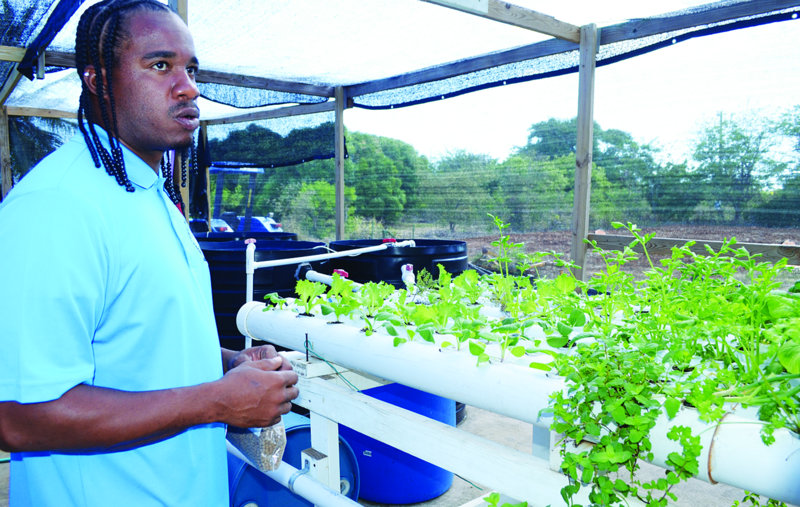
 Anguilla is making waves in sustainability with the pilot of Backyard Recirculating Aquaponics Systems, spearheaded by the Department of Natural Resources (Fisheries and Marine Resources) and the Agriculture Units. This forward-thinking project, funded by the EU’s RESEMBID Programme with technical support from Expertise France, tackles Anguilla’s challenges: limited arable land, water scarcity, and dependence on imports.
At a media briefing on Tuesday, April 22nd at the Agriculture Grounds, excitement was as fresh as the produce—up to 50kg per month—going to school feeding programmes, senior homes, and the wider community.
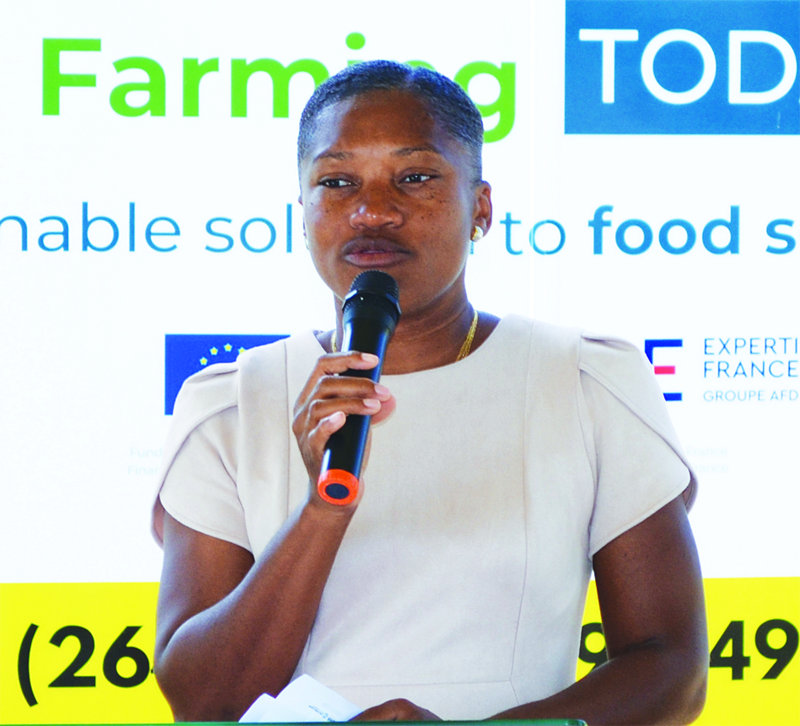
“More food, less land, less water,” said Ms. Isabel Rosario of the Agriculture Unit. “This is a game-changer for food security and climate resilience. It not only reduces our import reliance but creates space for youth entrepreneurship and innovation.”

Rosario cited collaborations with the Caribbean Climate Smart Schools Project, students, and the Zenaida Rehabilitation Centre, where low-tech hydroponics are already flourishing. “There’s a stigma that agriculture is for the poor or uneducated,” she said. “But with aquaponics and hydroponics, we’re flipping that narrative.”

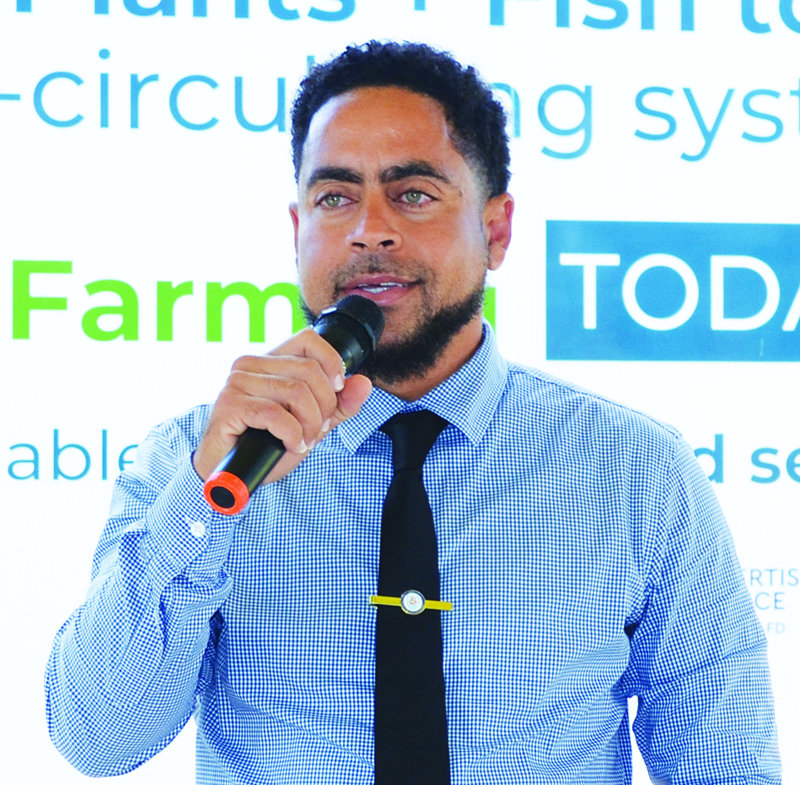
Minister of Fisheries and Agriculture, Hon. Kyle Hodge, echoed her passion. “We in Anguilla must begin to turn inward. Aquaponics is not just innovation—it’s empowerment, sustainability, and resilience in action.” He praised the Director of Fisheries Mrs. Kafi Wallace and her team: “When I saw the system being built from scratch—I was impressed. We have the talent right here.”
Wallace first envisioned the project after an aquaponics course in St Croix over a decade ago. “We then started developing this in 2020 and officially launched in March 2023—there was nothing on the ground then.”
Today, the €292,692 (EC$906,624.84) initiative includes five systems—at the Agriculture Department, Judith Gumbs Senior Care Home, Tender Loving Care Nursing Home, WISE, and Miriam Gumbs Senior Citizens Home (shared with the Princess Alexandra Hospital). The Project staff provides maintenance, with help from on-site personnel.
Waste is minimal. Extra greens feed farm animals, while tilapia are even reused as sustainable bait by fishers.
“It took time for people to catch on,” Wallace said, “but interest has exploded. Aquaponics isn’t just about vegetables—it’s a platform for cottage industries, livelihoods, and youth engagement.”
Project Manager Ann-Marie Lestrade noted its ripple effect. “We’re not just gaining ground—we’re gaining momentum.” In addition to the five demo systems, eleven more have been created independently by locals. Two restaurants also now use aquaponics.
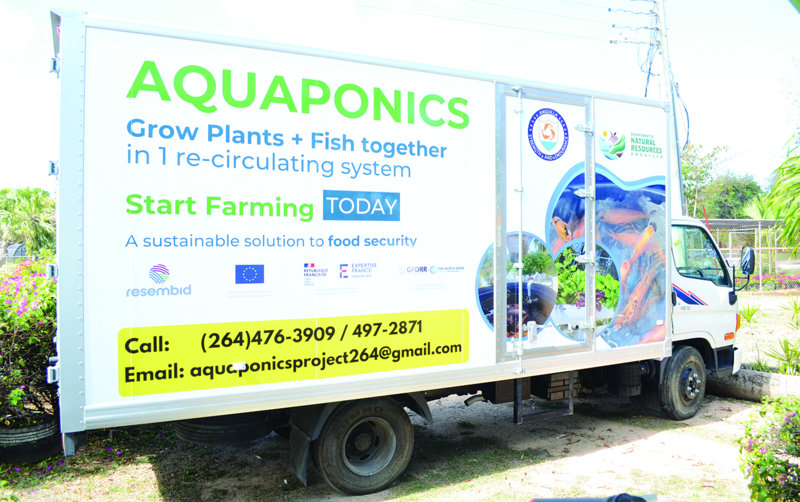
Over 120 participants attended grueling and technical training sessions for operating these systems – covering system construction and maintenance, seedling propagation, fish biology, and key water chemistry concepts like oxygen levels, nitrates, and sodium. Eleven of these trainees are officially certified. “We now have a field truck and cold storage vehicle to manage harvests from source to sale. This isn’t just a system—it’s a food supply chain in action,” Ms. Lestrade highlighted.
Visitors touring the systems saw lush crops—hot peppers, Bok Choy, mint, celery among others—alongside mature and juvenile fish, gender-separated for better breeding. Even in small spaces, plants and aquatic life thrive in harmony.
Nearby, fishers worked on Fish Aggregation Devices (FADs)—floating platforms that attract marine life. “It’s like a fish trap,” Wallace explained. “Instead of chasing fish, they come to you.”
While islands like Dominica and St Lucia deploy biodegradable FADs nearshore, Anguilla’s waters require durable synthetic materials. This approach is sustainable but carries risks if structures go adrift.
Tensions have also risen due to illegal fishing by St Martiners, some of whom have deployed FADs in Anguilla’s waters. To resolve this, the government launched publicly funded FADs, declared community property. “No one fisher can lay claim,” she said. “It’s for everyone.”
From school gardens to restaurant herbs, aquaponics is reshaping Anguilla’s agriculture.
As Ms. Rosario urged: “Be a part of the solution. Embrace agriculture. Embrace innovation.”